



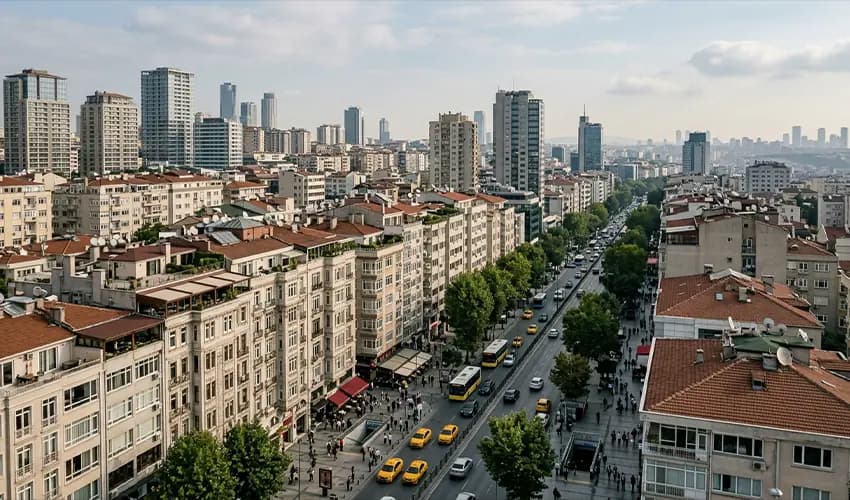
Sisli Istanbul stands as a major urban center on the European side of the city, blending its role as a central business district with a strong residential and cultural identity. The area offers a distinctive architectural contrast, where late 19th-century buildings and classic apartments share the skyline with contemporary residential towers and modern commercial plazas.
For those looking to understand Istanbul Sisli beyond a brief visit, the district reveals itself as a highly diverse environment. The district is also commonly written as “Shishli” in English-language searches. Whether you are drawn to historic streets, central business hubs, or highly connected transit points, this guide explores the practicalities, neighborhoods, and everyday amenities that define living in the district.
Where Is Sisli Istanbul?
Located in central Istanbul on the European side of the city, Şişli sits between several of Istanbul’s major business, residential, and transport districts. Şişli is a central urban district made up of 25 official neighborhoods and surrounded by several major commercial and residential areas.
For anyone researching the Sisli area, its central location is one of the district’s defining characteristics.
The Şişli area is bordered by:
- East: Beşiktaş
- North: Sarıyer
- West: Kağıthane and Eyüpsultan
- South: Beyoğlu
Its central location provides convenient access to Taksim, Beşiktaş, Levent, the historic city center, and Istanbul Airport through a combination of metro, Metrobus, road, and bus connections.
A Brief History of Sisli Istanbul
Before the late 19th century, much of the area that is now Şişli consisted of open land, gardens, and agricultural areas. The district’s major urban development accelerated after the Great Fire of Pera (Beyoğlu) in 1870, which prompted residents and businesses to move northward toward wider streets and newer infrastructure.
During this period of expansion, the district developed a cosmopolitan identity. New residential blocks emerged, featuring wide avenues and European-influenced architecture, particularly Art Nouveau and Neo-Baroque styles. The area was among the parts of Istanbul to benefit from the city's expanding modern infrastructure, including tram services and electricity.
Throughout the Republic era, areas along Halaskargazi Avenue grew rapidly, establishing the district as a central cultural and residential hub. From the mid-to-late 20th century onward, the district transformed further, integrating major business plazas and commercial centers alongside its historic residential fabric.
The Main Neighborhoods and Areas of Sisli Istanbul
Choosing the right neighborhood in Sisli depends heavily on lifestyle priorities. For people comparing neighborhoods in Sisli Istanbul, the differences in atmosphere, connectivity, and residential character can be significant.
Nişantaşı & Teşvikiye
Nişantaşı is a well-known area within Şişli, closely associated with Teşvikiye and known for its retail environment, historic apartment buildings, and walkable streets. Abdi İpekçi Avenue is one of Istanbul’s best-known retail streets, lined with international fashion brands and prominent boutiques. The residential landscape includes many established apartment buildings alongside newer residential developments. It remains highly popular among residents who prioritize an active, pedestrian-friendly urban lifestyle with immediate access to cafes and shopping.
Osmanbey
Situated along Halaskargazi Avenue, Osmanbey is widely recognized as a major commercial center, particularly for the textile and wholesale fashion industry. Beyond its commercial activity, it functions as a dense residential and transit hub with direct access to the M2 Metro line, bridging the environments of Nişantaşı and Mecidiyeköy.
Mecidiyeköy
Mecidiyeköy is one of Şişli’s busiest business and transportation hubs, with connections to the M2 and M7 metro lines and Metrobus. Dominated by commercial plazas, office spaces, and dense urban development, it is a highly practical area. It is favored by professionals and commuters who require maximum connectivity to different parts of the city.
Bomonti
Named after a historic brewery established in the late 19th century, Bomonti has undergone significant urban regeneration. The area is particularly known for modern high-rise residential development combined with a growing cultural and urban lifestyle. The area features contemporary residential complexes alongside cultural venues like Bomontiada, offering a distinct environment compared to the older, more traditional neighborhoods.
Gayrettepe
Located close to Beşiktaş and Levent, Gayrettepe serves as both a commercial and residential area. Its combination of business facilities, residential buildings, and strong metro connections makes it particularly practical for professionals and frequent travelers.
Kurtuluş
Kurtuluş, historically known as Tatavla, is a neighborhood characterized by a deep multicultural history and a strong sense of local community. It features narrower streets, traditional bakeries, and historic churches. It can appeal to residents looking for a more local and established neighborhood atmosphere than the retail-oriented areas of Nişantaşı and Teşvikiye.
Harbiye, Fulya & Esentepe
- Harbiye: Located near Taksim, this area is known for its cultural venues, including the Lütfi Kırdar Convention Center and the Military Museum.
- Esentepe: Positioned along Büyükdere Avenue, Esentepe is a major corporate corridor housing prominent business plazas and municipal buildings.
- Fulya: A densely developed residential area with convenient access to major private healthcare facilities and central transport routes.
Lifestyle and Amenities in Sisli Istanbul
Everyday life in the district is supported by a comprehensive network of services, shopping, and civic amenities.
Shopping and Fashion
The district provides an extensive retail environment. Beyond the street-level boutiques of Nişantaşı, Istanbul Cevahir is one of the city's major shopping and entertainment centers, with a large selection of retail, dining, and leisure facilities. Residents in eastern Şişli also have convenient access to major shopping centers in nearby Levent and surrounding areas, including Kanyon, ÖzdilekPark, and MetroCity.
Parks and Green Spaces
While Şişli is a dense urban environment, Maçka Democracy Park provides a substantial green space utilized for walking, recreation, and outdoor activities. The Maçka–Taşkışla cable car provides a distinctive connection between the Maçka and Taşkışla areas. Nearby, the Ihlamur Pavilion offers a historic green space on the district's borders.
Cafés, Dining and Everyday Life
The social environment varies significantly by neighborhood. Nişantaşı is known for its cafés, restaurants, and retail, while Bomonti and Kurtuluş offer different dining and social environments, ranging from modern venues in regenerated industrial spaces to traditional local eateries.
Culture and Community
The district retains a strong cultural presence. The Atatürk Museum on Halaskargazi Avenue is one of Şişli’s notable historical sites and documents an important period of Mustafa Kemal Atatürk’s life. The Cathedral of the Holy Spirit (Saint Esprit) in Pangaltı reflects the area's historical diversity, while various galleries and performance spaces contribute to modern civic life.
Transportation and Connectivity in Sisli
The metro network and integrated transit options form the backbone of transportation in Şişli, offering efficient connections across Istanbul.
M2 Metro
The M2 line serves key stations at Osmanbey, Şişli-Mecidiyeköy, and Gayrettepe. It connects Şişli with central destinations such as Taksim and Levent, with onward connections to other parts of Istanbul.
M7 Metro
The M7 line connects the central Mecidiyeköy hub to districts on the western side of the city, improving cross-town travel without relying on road traffic.
Metrobus
Metrobus provides a dedicated rapid-transit connection across the European and Asian sides of Istanbul, including through the 15 July Martyrs Bridge corridor. Major stops at Mecidiyeköy and Zincirlikuyu make it a crucial asset for daily commuters.
Gayrettepe and M11 Airport Connection
M11 provides a direct rail connection from Gayrettepe to Istanbul Airport, making the area particularly convenient for frequent international travelers who wish to bypass highway traffic.
Getting Around by Road
Major arterial routes like Büyükdere Caddesi and Halaskargazi Caddesi run through the district. While they provide direct routes to major highways, they are subject to heavy traffic, making the rail network a preferred choice for daily commuting.
Education, Healthcare and Everyday Services
For long-term residents, the district provides a robust infrastructure of essential services.
Schools and Education
Şişli and its surrounding central districts are home to several established schools and university campuses, including institutions serving Turkish, French, and international curricula. This accessibility makes the area practical for families prioritizing education.
Hospitals and Healthcare
Şişli has a strong concentration of private healthcare facilities, including the American Hospital, Memorial Şişli, Florence Nightingale, and Acıbadem Fulya, offering comprehensive medical services to residents.
Daily Amenities
Supermarkets, pharmacies, banks, fitness centers, and other everyday services are widely available across the district, ensuring that daily requirements can usually be met within a short distance of residential areas.
What Is It Like to Live in Sisli Istanbul?
Living in Sisli offers a distinctly urban experience characterized by convenience and activity.
Is Sisli Safe?
Şişli is generally regarded as a busy and well-established central district, but safety can vary by street, neighborhood, and time of day. As in any major urban area, normal precautions are advisable, particularly around crowded transport hubs such as Mecidiyeköy.
Is Sisli Walkable?
The district is more walkable in some neighborhoods. Areas such as Nişantaşı, Teşvikiye, and Kurtuluş offer a more pedestrian-oriented daily environment, with shops, cafés, and services within walking distance in many parts. In contrast, commercial centers like Mecidiyeköy and Esentepe are intersected by major roads and overpasses, making them less suited for casual walking.
Who Is Sisli Best Suited For?
The district accommodates a wide variety of residents. Beşiktaş may appeal more to people who prioritize waterfront access and a more social, neighborhood-oriented atmosphere, while Şişli offers stronger access to major metro lines, business districts, and established retail areas. Professionals benefit from the transit connections, while families often choose the area for its healthcare and educational facilities.
Pros and Cons of Living in Sisli
Advantages
- Central Location: Immediate proximity to major business and cultural centers.
- Transportation: Strong connectivity via the M2 and M7 metro lines, Metrobus, and the M11 airport connection from Gayrettepe.
- Healthcare & Services: High concentration of hospitals, clinics, and daily amenities.
- Neighborhood Variety: Options ranging from historic communities to modern residential towers.
Things to Consider
- Urban Density: The district is highly populated and active throughout the day.
- Traffic: Major avenues experience heavy congestion.
- Noise and Activity: Quieter suburban environments are rare in this central location.
- Parking: Older neighborhoods often have limited street parking availability.
Is Sisli a Good Place to Live?
For people who prioritize centrality, transportation, healthcare, shopping, and an active urban environment, Şişli can be one of the strongest residential choices on Istanbul’s European side. Its variety of neighborhoods allows residents to find a specific atmosphere that suits their daily routines, whether that involves easy commutes to business centers or walkable access to local cafes.
Considering Property in Sisli?
The residential landscape in Şişli varies widely by neighborhood. Buyers can find historic, high-ceilinged apartments in areas like Teşvikiye, modern high-rise complexes in Bomonti, and urban apartments near major transit hubs in Mecidiyeköy. If you are evaluating the area for a potential move, you can explore residential projects in Sisli to review current options and compare property styles across the district.
FAQ
Where is Sisli Istanbul?
It is located in central Istanbul on the European side, bordered by Beşiktaş, Beyoğlu, Sarıyer, Kağıthane, and Eyüpsultan.
Is Sisli a good place to live?
Yes. Şişli can be an excellent choice for people who want central access, strong public transportation, healthcare, education, shopping, and an active urban lifestyle.
Is Sisli safe?
It is a well-established urban district with active streets. While general safety is consistent with major global city centers, standard urban precautions should be taken, particularly near busy transit stations.
What is Sisli known for?
The district is known for its central business plazas, the retail streets of Nişantaşı, the Istanbul Cevahir shopping center, and its dense network of public transportation.
Which neighborhoods are in Sisli?
Şişli contains 25 official neighborhoods, while well-known areas commonly associated with the district include Nişantaşı, Teşvikiye, Mecidiyeköy, Bomonti, Kurtuluş, Osmanbey, and Gayrettepe.
How is public transportation in Sisli?
Public transportation is one of Şişli’s major advantages. The district is served by the M2 and M7 metro lines, Metrobus, M11 connections from Gayrettepe, buses, and major road corridors.
Is Sisli a good area for families and expats?
Yes. Its central transportation network, healthcare facilities, and access to established schools make it a practical option for families and international residents.