


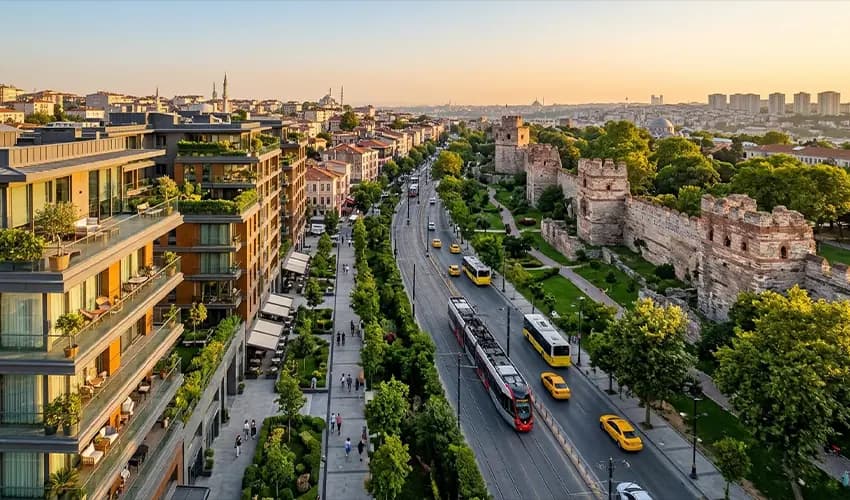
When searching for property in Istanbul, buyers often consider a neighbourhood’s location, residential character, transport connections, and long-term potential. Topkapi, on the city’s European side within the Fatih district, combines a long-established urban setting with access to several major transport routes and important historical landmarks. Its housing stock includes established apartment buildings within the neighbourhood, while newer residential developments are also marketed in the wider Topkapi area and neighbouring districts.
Whether you are considering an apartment in one of Topkapi’s established residential streets or a newer development in the surrounding area, understanding the neighbourhood’s location and housing market is important. This guide examines Topkapi’s residential character, transport links, everyday amenities, property types, and the key considerations buyers should review before making a decision.
Where Is Topkapi in Istanbul?
Topkapi’s Location on Istanbul’s European Side
Topkapi is located on Istanbul’s European side, within the western part of the Fatih district and close to the historic city walls. Its position provides access to the wider transport network connecting the historic peninsula with districts further west. The D100 highway, commonly known as the E-5, and the Cevizlibağ transport corridor are important transport reference points in the wider area. However, access to these routes varies depending on the property’s exact location.
Topkapi and Its Relationship with Fatih
Topkapı Mahallesi is an officially recognised neighbourhood (mahalle) within the Fatih district of Istanbul. It lies in the western part of Fatih, near the district boundary with Zeytinburnu. Although Fatih is widely associated with Istanbul’s historic peninsula, Topkapi has its own urban character, shaped by residential streets, local businesses, transport routes, and the historic city walls.
Topkapi Neighbourhood vs. Topkapi Palace
A common point of confusion for international property buyers is the difference between the Topkapi neighbourhood and the famous Topkapi Palace.
- Topkapi Palace (Topkapı Sarayı): The former Ottoman imperial palace is located on the historic peninsula, near Sultanahmet and the eastern part of Fatih.
- Topkapi Neighbourhood (Topkapı Mahallesi): This is a separate residential neighbourhood in western Fatih, close to Istanbul’s historic land walls.
This guide focuses on Topkapı Mahallesi and the surrounding residential property market, rather than the palace or its tourist attractions.
What Is Topkapi Like?
The Residential and Urban Character of Topkapi
Topkapi has an established urban character, with residential streets, local shops, small businesses, and busy transport corridors. Its setting near Istanbul’s historic land walls gives the neighbourhood a distinctive historical context, while its everyday environment is shaped by the practical needs of people who live, work, and study in the wider area. Buyers should expect a relatively busy city environment rather than a quiet suburban setting.
Historic Surroundings and Modern Development
One of Topkapi’s most recognisable features is its proximity to Istanbul’s historic land walls (Kara Surları). These fortifications form an important part of the wider area's historical setting and distinguish it from many other residential areas on the European side of the city. The wider area also includes a mix of established apartment buildings and newer residential developments. However, some projects marketed under the Topkapi name are located in neighbouring districts, so buyers should check the exact address rather than relying on the project’s marketing name alone.
Residential Streets and Local Differences
The housing and street environment can vary across the wider Topkapi area. Some parts of the neighbourhood are characterised by established apartment buildings and smaller local businesses, while areas closer to major roads and neighbouring districts have a more commercial and transport-oriented character. Newer residential complexes are also marketed under the Topkapi name, but their locations should be checked individually, as some may fall outside the official boundaries of Topkapı Mahallesi.
Living in Topkapi: Lifestyle and Daily Life
Everyday Atmosphere and Local Community
Daily life in Topkapi is shaped by local shops, bakeries, grocery stores, cafés, and neighbourhood services. Streets with a mainly residential character can offer a different atmosphere from the busier roads and transport corridors around the area. This contrast is worth considering when choosing a property, particularly for buyers who prefer a quieter home environment while still wanting convenient access to everyday services.
Is Topkapi Suitable for Families?
Topkapi may suit families who prioritise access to public transport, schools, healthcare, and everyday services. Bezmialem Vakıf University and its hospital are among the area's notable educational and healthcare institutions. The university's main campus is located on Adnan Menderes Boulevard in Topkapı Mahallesi, while the hospital is also located on Vatan Caddesi in Fatih. The wider area offers access to additional educational and healthcare facilities.
However, Topkapi is an established urban area rather than a low-density suburb. Families looking for large private gardens, detached houses, or extensive green spaces may prefer to compare it with other parts of Istanbul. The suitability of the neighbourhood will depend on the exact street, property, and family’s daily routine.
Advantages and Limitations of Living in Topkapi
Advantages: Access to several public transport options, proximity to Bezmialem Vakıf University and its hospital, a historic urban setting, and everyday shops and services.
Limitations: Busy roads in some parts of the area, potentially limited parking on older residential streets, a relatively dense urban environment, and fewer opportunities for large open green spaces than in some suburban districts.
The experience can vary considerably depending on the property’s exact location, so buyers should assess the immediate surroundings rather than relying only on the neighbourhood name.
Public Transport and Connectivity in Topkapi
Metro, Tram and Other Public Transport Connections
Topkapi benefits from connections between several metro, tram, and Metrobus routes. Key stations in the wider area include Topkapı, Topkapı-Ulubatlı, Vatan, and Cevizlibağ.
- M1A and M1B Metro Lines: Both lines serve Topkapı-Ulubatlı station. They share the route between Yenikapı and Otogar before continuing towards different destinations. The M1A terminates at Atatürk Havalimanı station, while the M1B continues to Kirazlı. At Yenikapı, passengers can connect to other major transport services, including Marmaray.
- T1 Tram Line: Topkapı and Pazartekke are among the relevant stops for residents in the area. The line runs between Kabataş and Bağcılar, serving central locations such as Sultanahmet and Eminönü.
- T4 Tram Line: The T4 runs between Topkapı and Mescid-i Selam. Passengers can transfer to the T1 tram and Metrobus at Topkapı, and to the M1A and M1B metro lines at Vatan.
- Metrobus: Topkapı and Cevizlibağ are two Metrobus stations serving the wider area, with connections across the European side and over the Bosphorus to Istanbul’s Asian side.
Road Access and Connections to Other Parts of Istanbul
For drivers, the wider road network also provides routes towards other parts of Istanbul, including connections that drivers may use to reach the Eurasia Tunnel. Actual journey times and the most convenient route depend on traffic conditions and the property’s location.
Checking Transport Access Before Choosing a Property
Although the wider Topkapi area has several transport connections, not every property is within easy walking distance of every station. Before buying, check the actual walking route from the building entrance to the nearest suitable metro, tram, or Metrobus stop. Consider the route’s slope, pedestrian crossings, access points, and the time needed to reach the station. Convenient transport access can make a property more attractive to residents and tenants, but it should be assessed alongside other factors such as building condition, layout, and price.
Daily Amenities and Facilities in Topkapi
Topkapi and its surrounding area offer a range of everyday services, including educational facilities, healthcare providers, shops, and public spaces.
Schools and Educational Facilities
Topkapi has access to educational facilities within the neighbourhood and across the wider Fatih area. One of its most notable higher education institutions is Bezmialem Vakıf University, whose main campus is located on Adnan Menderes Boulevard in Topkapı Mahallesi. Other universities, including Yıldız Technical University and İstinye University, have campuses in nearby or wider parts of Istanbul, but they should not be described as being located within the official Topkapı neighbourhood. Families should check the location, admission requirements, and daily travel distance of individual schools when choosing a property.
Hospitals and Healthcare Services
Healthcare access is one of the practical advantages of the wider Topkapi area. Bezmialem Vakıf University Hospital is located on Adnan Menderes Boulevard (Vatan Caddesi), and the university’s main address is also listed in Topkapı Mahallesi, Fatih. Residents can also find pharmacies, clinics, and other healthcare services in the surrounding neighbourhoods. Buyers should check the distance from a specific property to the healthcare facilities they are most likely to use.
Shopping, Local Markets and Everyday Services
Everyday shopping in Topkapi is supported by local grocery stores, bakeries, supermarkets, and small retail businesses. For a wider shopping experience, residents can also visit Historia Shopping and Life Center in the Fatih area, which offers a range of retail and dining options. The availability of shops and services varies from one street to another, so buyers should explore the immediate surroundings of a property before making a decision.
Parks and Public Spaces
Topkapi’s public spaces include local squares and smaller neighbourhood parks. One example is Topkapı Kaleiçi Meydanı, a public square integrated with the historic land walls. It was opened to the public in February 2026 following renovation and public-space improvement works by Fatih Municipality. While such spaces provide places for residents to meet and spend time outdoors, buyers looking for larger parks or extensive green areas should assess the available options around their specific property.
Residential Properties and Housing Types in Topkapi
Older Apartment Buildings and Established Housing
Established residential streets in Topkapi include older apartment buildings with a range of layouts, building ages, and maintenance conditions. Some properties may offer larger room arrangements than newer compact apartments, while others may require renovation or upgrades to their shared facilities. Features such as lifts, parking, insulation, security, and building maintenance vary from one building to another, so buyers should assess each property individually rather than assuming that all older buildings have the same characteristics.
Newer Residential Developments and Modern Complexes
Newer residential developments are also marketed in the wider Topkapi area and neighbouring districts. Depending on the project, these properties may offer modern apartment layouts, lifts, security services, indoor parking, fitness facilities, or shared recreational areas. However, the available features differ considerably between developments. Buyers should also confirm whether a project is actually located in Topkapı Mahallesi, Fatih, or in a neighbouring district such as Zeytinburnu or Bayrampaşa.
Buyers should also compare the ownership and management arrangements of different property types. In an older apartment building, shared maintenance and repair decisions may be handled differently from those in a professionally managed residential complex. In newer developments, facilities such as security, parking, lifts, and shared recreational areas may involve monthly service charges, which should be considered alongside the purchase price.
Building Conditions and Urban Transformation
Urban regeneration (kentsel dönüşüm) is an important consideration when assessing older properties in Istanbul, including those in Topkapi. However, the condition and earthquake performance of a building cannot be determined from its age or appearance alone. Buyers should review the available structural and engineering documentation, check whether the building has undergone an official risk assessment or reinforcement work, and obtain independent professional advice where necessary. Any redevelopment plans should also be checked against the applicable municipal planning rules and, where relevant, heritage-protection requirements.
The Property Market in Topkapi
What Influences Property Prices in Topkapi?
Property prices in Topkapi can vary significantly depending on the building, street, apartment specifications, and exact location. Some of the main factors buyers should consider include:
- Building Age and Condition: Newer buildings may offer modern facilities and updated construction standards, while older apartments can differ in maintenance needs, structural condition, and renovation costs.
- Transport Access: Walking distance to metro, tram, and Metrobus stations can influence a property’s convenience and appeal to potential residents or tenants.
- Building Facilities: Features such as lifts, parking, security, shared recreational areas, and building management may influence buyers’ preferences and the overall cost of ownership.
Comparing Different Property Types and Locations
When comparing properties in the wider Topkapi market, buyers may encounter substantial differences in building age, apartment size, facilities, and location. An older apartment in an established residential street may have different purchase and renovation costs from a unit in a newer managed development. A meaningful comparison should take account of price per square metre, usable floor area, building condition, monthly service charges, transport access, and the legal status of the property.
In Topkapi, the distinction between the official neighbourhood and the wider area is particularly important when comparing listings. A property advertised as being in Topkapi may be located in Fatih, Zeytinburnu, or another neighbouring district. Buyers should therefore compare properties using their official addresses and exact locations, rather than relying solely on listing titles.
Buying for Residential Use or Rental Investment
Topkapi may be worth considering for buyers interested in long-term rental use, particularly because of its location within the wider Fatih area and its access to educational, healthcare, and transport facilities. Smaller apartments may appeal to some tenants, but rental demand and achievable income depend on factors such as apartment condition, furnishing, layout, monthly costs, and proximity to key destinations. Before purchasing for investment, buyers should compare current asking rents with realistic purchase prices and account for vacancy periods, taxes, maintenance, and management expenses.
What Should You Check Before Buying Property in Topkapi?
Building Age, Structural Condition and Earthquake Safety
When buying an older apartment, do not rely on the building’s appearance or construction date alone to assess earthquake safety. Ask for any available structural assessment, earthquake-risk report, reinforcement records, and relevant engineering documentation. Where the available information is incomplete or raises concerns, consider obtaining an independent assessment from a qualified structural engineer. Buyers should also distinguish between an official building risk assessment and a general technical inspection, as they serve different purposes.
Title Deeds (Tapu), Occupancy Permits and Legal Documents
Before purchasing, verify the property’s title deed (Tapu), land registry records, and any mortgages, liens, restrictions, or other encumbrances recorded against it. Buyers should also check the building’s occupancy permit (Yapı Kullanma İzin Belgesi, commonly known as İskan) and compare the land registry records with the actual apartment and approved project documents. The absence of an occupancy permit may raise legal, technical, or practical concerns, so its implications should be reviewed with a qualified professional before signing the purchase agreement.
Historical Protection and Urban Planning Restrictions
Properties near Istanbul’s historic land walls may be subject to additional planning and heritage-protection requirements. However, these restrictions do not automatically apply to every property in Topkapi. Before purchasing a property with redevelopment or renovation plans, check its exact parcel location, zoning status, planning notes, and any applicable conservation decisions with the relevant authorities. Where a property is within a protected area or affects a historic structure, additional approvals may be required before work can proceed.
Location, Service Charges and Long-Term Costs
Always verify the exact location of a property using its official address and land registry details. Some developments are marketed under the name "Topkapi" even though they are officially located in neighbouring districts such as Zeytinburnu or Bayrampaşa. If you are buying in a managed residential complex, review the monthly service charges (aidat), the facilities covered by those charges, and any additional maintenance expenses. These recurring costs should be included when calculating the property’s total ownership cost and potential rental return.
Is Topkapi a Good Area to Buy Property in Istanbul?
Potential Advantages for Property Buyers
Potential advantages of buying in Topkapi include its location within Fatih, access to several public transport routes, proximity to Bezmialem Vakıf University and its hospital, and its established urban environment. These factors may appeal to buyers looking for a centrally located home or a property to rent out. However, future price growth and rental performance cannot be guaranteed and should be assessed using current market data, property-specific costs, and the building’s legal and technical condition.
Limitations and Factors to Consider
Buyers should pay particular attention to the condition of older buildings, the availability of parking, traffic on major roads, and any planning or heritage restrictions that may apply to a specific property. Topkapi also has a relatively active urban environment, which may not suit buyers who prioritise quiet streets, extensive green spaces, or a low-density residential setting.
Who May Benefit Most from Buying in Topkapi?
- Buy-to-let investors: Buyers considering rental income may want to assess properties close to transport links, educational facilities, and healthcare services, while carefully checking realistic rental values and ownership costs.
- City professionals: People who regularly travel across Istanbul may find the area’s metro, tram, and Metrobus connections useful, depending on their workplace and the property’s location.
- International buyers: Overseas purchasers looking for a property in a central European-side district may consider Topkapi, provided they verify the property’s legal status, building condition, and suitability for their individual requirements. Anyone purchasing with the aim of applying for Turkish citizenship should obtain separate legal advice and confirm that the specific property meets the applicable legal criteria.
Frequently Asked Questions About Topkapi, Istanbul
Is Topkapi a good place to live in Istanbul?
Topkapi may suit people who prefer an established urban neighbourhood with access to public transport, local shops, and healthcare services. Traffic, parking, and the condition of individual buildings are important factors to consider.
Is Topkapi a good area to buy property?
It may be worth considering for buyers interested in a centrally located property in Fatih. The suitability of an individual property depends on its price, location, legal status, building condition, and potential rental or resale prospects.
Is Topkapi part of Fatih?
Yes. Topkapı Mahallesi is an officially recognised neighbourhood within the Fatih district on Istanbul’s European side.
Is Topkapi Palace located in Topkapi neighbourhood?
No. Topkapi Palace is located on Istanbul’s historic peninsula near Sultanahmet. It is separate from Topkapı Mahallesi, the residential neighbourhood in the western part of Fatih.
What types of properties are available in Topkapi?
The wider Topkapi property market includes established apartment buildings as well as newer residential developments. Property features, building ages, apartment layouts, and shared facilities vary by location and project.
Is Topkapi well connected to public transportation?
Topkapi has access to several major public transport services, including the M1A and M1B metro lines, T1 and T4 tram lines, and Metrobus connections. The most convenient station depends on the property’s exact location.
Is Topkapi suitable for families?
Topkapi may suit families who value access to healthcare, education, shops, and public transport. However, it has a relatively busy urban character, so families should compare individual streets, nearby schools, outdoor spaces, and the layout of available properties.
What should buyers check before purchasing property in Topkapi?
Buyers should verify the title deed, registered property details, occupancy permit, building condition, available earthquake-related documentation, and any planning or heritage restrictions affecting the property. They should also check monthly service charges and confirm the property’s official district and neighbourhood address.
Explore Properties for Sale in Topkapi
If you are considering buying a home or investment property in Topkapi, reviewing individual developments and their exact locations is an important next step. Explore the properties currently available in Topkapi or contact our team for assistance with comparing locations, property features, and the key checks involved in buying real estate in Istanbul.