



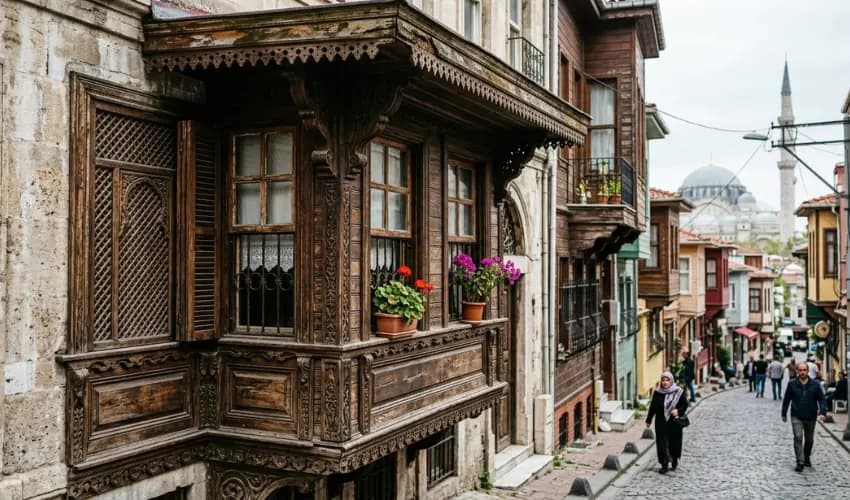
Istanbul is a city that exists as a magnificent urban palimpsest, where layers of modern development rest gracefully upon centuries of imperial history. While contemporary high-rises and modern developments continue to alter the city's skyline, the traditional Istanbul houses constructed of timber and stone remain the true, beating heart of the city’s authentic spirit.
Walking through the historic, winding corridors of this metropolis reveals a built heritage that serves as a physical archive of the Ottoman era. For discerning buyers and real estate investors, acquiring and preserving these historical assets represents far more than a standard property transaction. It is an investment in scarce cultural capital, offering high long-term appreciation, unique opportunities for adaptive reuse, and a tangible connection to the legacy of one of the world's greatest empires.
If you are looking to combine a luxurious lifestyle with deep-rooted cultural heritage, understanding the market for historic properties is your first step toward an extraordinary investment.
Why Old Houses for Sale in Istanbul Are a Smart Investment
Investing in historic vernacular real estate offers a distinct dual advantage, rooted in absolute physical scarcity and unparalleled structural durability. The market dynamics governing these properties differ fundamentally from modern residential developments.
The Value of Absolute Scarcity
The primary value driver for historic real estate is its finite nature. The surviving stock of genuine Ottoman-era residential structures is shrinking due to historic fires, past urbanization, and the simple passage of time. Modern construction, no matter how luxurious, cannot replicate the historical provenance, the original old-growth materials, or the localized geographic positioning of these properties.
Because the supply is perfectly inelastic, whenever old houses for sale in Istanbul enter the market, they command a premium. This value naturally escalates as the aggregate stock of unrestored structures diminishes, making them a highly secure asset class for long-term wealth appreciation.
Structural Resilience and Vernacular Engineering
The structural integrity of traditional Istanbul houses represents a historic peak in architectural engineering. The timber-frame systems utilized in these buildings were developed as a highly sophisticated response to the seismic vulnerabilities of the Marmara region. Unlike rigid modern concrete structures, these interlocking wooden frames possess excellent elasticity. The flexible joints of the timber skeleton absorb and dissipate seismic shock waves, allowing the building to sway safely without collapsing.
High Potential for Adaptive Reuse
Under the guidelines of Turkish heritage preservation laws, historic residential structures offer incredible versatility. Many of these grand homes can be converted into luxury boutique hotels, cultural venues, fine-dining restaurants, or high-end corporate headquarters. This flexibility allows investors to capture premium commercial yields while preserving the historic character of the building, perfectly matching the growing global demand for culturally authentic tourism and experiential spaces.
Top Historic Neighborhoods to Find an Ottoman House for Sale Istanbul
The architectural character of historic properties is deeply intertwined with the cultural history of the neighborhoods in which they were constructed. To find the perfect property, you must first understand the city's diverse localized histories. Here are the top districts to explore:
1. The Historic Peninsula: Fatih, Süleymaniye, and Balat
Fatih is the undeniable heart of classical Ottoman civilian architecture. Neighborhoods like Süleymaniye and Zeyrek are so historically significant that they were designated as UNESCO World Heritage sites in 1985. The streets here follow the natural topography, resulting in winding cobblestone alleys lined with wooden structures featuring beautiful projecting bay windows known as cumba.
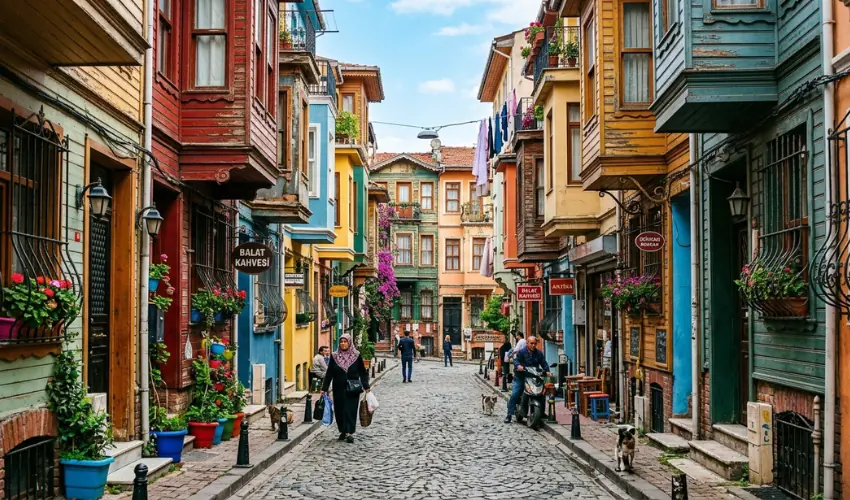
Adjacent to the Golden Horn lie Balat and Fener, historically the residential enclaves of Istanbul’s Greek Orthodox, Jewish, and Armenian communities. The architecture here features highly photogenic, narrow-fronted, three-to-four-story timber and brick houses. Today, Balat has experienced a massive revitalization, making it an excellent area for cultural investors.
2. The European Transition: Beyoğlu, Galata, and Cihangir
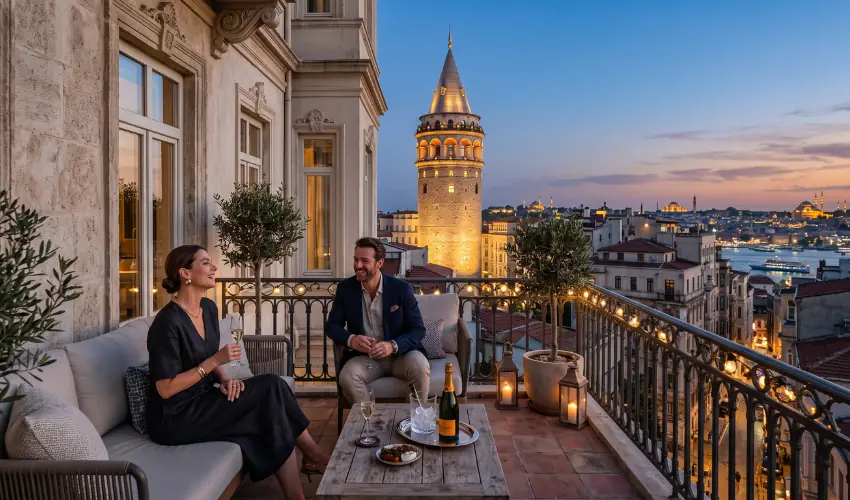
Across the Golden Horn, districts like Beyoğlu, Galata, and Cihangir showcase the 19th-century westernization of the Ottoman Empire. Following the Tanzimat reforms, traditional wooden homes were replaced by dense, multi-story masonry buildings designed in Neoclassical, Art Nouveau, and Eclectic styles.
These neighborhoods were the diplomatic and commercial hubs of the late empire. Today, if you are searching for old apartments for sale in Istanbul, these districts offer the finest selections. Properties here feature grand ceiling heights, detailed stone masonry facades, and ornate iron balconies, appealing highly to cosmopolitan buyers and those seeking strong long-term residential rental yields.
3. The Bosphorus Shoreline: Arnavutköy, Ortaköy, and Sarıyer
Along the shores of Beşiktaş, Sarıyer, Emirgan, and Arnavutköy, you will find the most prestigious of all Ottoman residential forms: the Yalı. These grand, waterfront timber mansions were originally built as summer residences for the imperial family, state ministers, and foreign ambassadors. Arnavutköy is famously characterized by pastel-colored facades and ornate hand-carved wooden eaves, while estates in Sarıyer offer lush private gardens. These properties command the highest valuations in the Turkish real estate market.
4. The Multicultural Asian Shore: Kuzguncuk and Üsküdar
For a more tranquil, village-like atmosphere, the Asian side of the Bosphorus is a hidden gem. Kuzguncuk showcases a history of peaceful multi-ethnic coexistence, with synagogues, churches, and mosques standing side-by-side. The streets are lined with brightly painted wooden houses featuring intricate wood-carvings and balconies. The historic residential stock here is highly sought after by buyers wanting a culturally rich, quiet lifestyle.
5. Kadıköy’s Modern Heritage: Yeldeğirmeni and Moda
Further south on the Asian side, Kadıköy’s Yeldeğirmeni and Moda neighborhoods represent a crucial milestone in Istanbul's transition to modern apartment living. Yeldeğirmeni is recognized as the first planned apartment neighborhood in the city, originally built to house Italian craftsmen and Jewish mercantile families. Moda evolved as a fashionable seaside quarter favored by artists and intellectuals. Both areas are exceptional hotspots for finding historically significant stone and brick apartments.
6. The Princes' Islands: Büyükada and Heybeliada
For investors seeking a complete departure from urban density, the car-free Princes' Islands contain some of the most remarkable historic estates in Turkey. Developed as affluent summer retreats, these islands feature grand, detached wooden mansions (köşk) built in Victorian and Art Nouveau styles. Surrounded by pine forests and overlooking the Marmara Sea, these properties offer a highly specialized and prestigious segment of the real estate market.
The Anatomy and Architecture of Traditional Istanbul Houses
The design of a traditional Ottoman residence was never arbitrary. It was a precise architectural translation of domestic lifestyle, social etiquette, and family values. Understanding the interior of an Ottoman house for sale Istanbul is essential for appreciating its true historical value.
The Spatial Philosophy: Harem and Selamlık
At the core of Ottoman domestic life was the preservation of privacy, leading to a strict division between public and private spaces.
The Harem: This was the private family domain, reserved exclusively for the women, children, and immediate relatives. It was designed with minimal exterior visibility to ensure absolute privacy from the street.
The Selamlık: This was the public and administrative wing, where the male head of the household received guests and conducted business.
The Sofa and the Divanhane
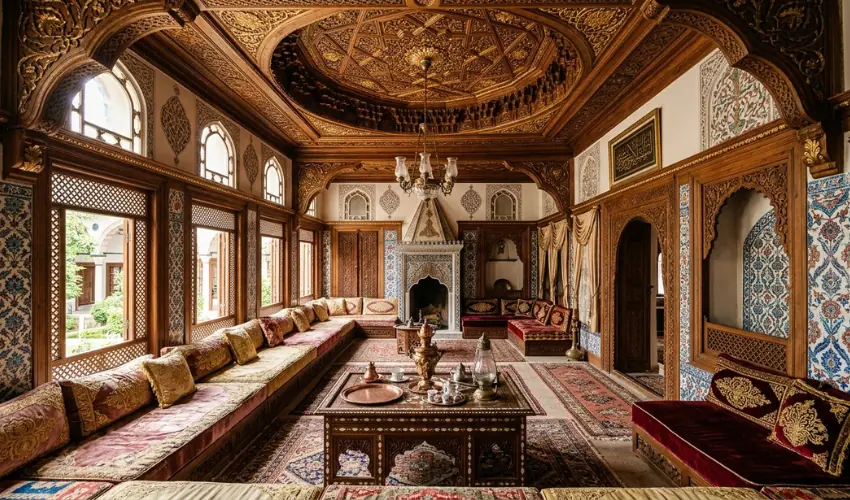
The spatial layout of these homes is organized around the Sofa (or hayat). This grand central hall served as a circulation lobby and a communal gathering space into which all individual rooms opened.
In larger estates, the grandest receiving room connected to the sofa was the Divanhane. This double-height space was the crown jewel of the home, featuring highly decorative, hand-carved wooden ceilings, elaborate plaster moldings, and elevated platforms designed for formal hosting and musical performances.
Technical Craftsmanship and Materials
The typical Ottoman house sits on a heavy ground floor constructed of rough stone masonry (the taşlık), which served as a solid foundation and a thermal buffer. The upper floors were built using sophisticated timber frames, utilizing three primary techniques:
Hımış: A heavy timber frame filled with sun-dried adobe bricks, clay, or stone, providing excellent seismic friction-damping.
Bağdadi: A lightweight timber frame with horizontal wooden laths coated in lime and organic fiber plaster, offering superior flexibility.
Çatma: A highly engineered frame featuring diagonal braces and vertical studs, faced with horizontal wood cladding to protect against humid coastal weather.
Builders meticulously selected their wood. Yellow pine was favored for structural framing due to its strength, while sessile oak and sweet chestnut were used for exteriors because their natural tannins provided immense resistance to rot and insects.
Navigating the Purchase: Legal, Technical, and Restoration Guidelines
Acquiring and restoring a historic property in Turkey requires navigating a strict legal landscape, primarily governed by Law No. 2863 on the Conservation of Cultural and Natural Property.
Grade I vs. Grade II Listed Buildings
Before purchasing, investors must verify a building's conservation grade:
Grade I (Monumental Heritage): These buildings must be conserved exactly in their original form. Interior floor plan changes are prohibited, and restoration must utilize original materials and techniques.
Grade II (Civil Architecture Vernacular): This comprises the majority of traditional houses and old apartments. While the exterior facade and structural timber must be preserved, the internal layout allows for flexibility, permitting the addition of modern kitchens, bathrooms, and heating systems.
Due Diligence for Buyers
Any intervention requires permits from municipal authorities like KUDEB. Minor maintenance requires a "Simple Repair" permit, while structural changes require a "Comprehensive Restoration" project involving detailed architectural surveys (Rölöve, Restitüsyon, Restorasyon).
When buying, always verify the property’s title deed (Tapu), check for outstanding municipal liens, ensure there are no unauthorized concrete additions to the timber frame, and confirm all previous restorations have official completion certificates from the Regional Conservation Council.
Recommended Reading:
New Property Purchase Laws in Turkey
The Role of Istaproperty in Securing Elite Heritage Assets
Finding a true Ottoman house for sale in Istanbul is a rare opportunity. Our expert team at Istaproperty specializes in identifying unique properties that meet both historical integrity and modern living standards. Whether you are seeking a grand waterfront mansion, a charming wooden home in Balat, or a historic Neoclassical apartment in Galata, we provide a curated selection of opportunities that are not always available on the open market. We guide our clients through every step of the complex legal and structural due diligence process, ensuring a secure and highly rewarding investment.
Conclusion
Traditional Istanbul houses are a breathtaking blend of Ottoman architectural brilliance and modern investment potential. By purchasing one of these historic properties, you are not simply acquiring real estate; you are securing an irreplaceable piece of cultural heritage built with enduring craftsmanship. These homes offer scarcity, structural resilience, and an undeniable aesthetic charm that appreciates over time.
Do not miss the opportunity to own a piece of Istanbul’s magnificent history. Explore our latest listings in Istanbul’s historic districts or Contact our consultants for personalized investment advice today.