


 English
 فارسی
فارسی
 العربية
 русский
 USD
USD
 TRY
TRY
 EUR
EUR
 IRR
IRR
 RUB
RUB

Introduction to Geoeconomic Architecture and Turkey's Real Estate Macro-Structure in 2026
The Republic of Turkey, serving as a strategic geoeconomic and transit hub bridging Europe, Asia, and the Middle East, has consistently ranked among the most dynamic and high-yielding international property markets over recent decades. In 2026, the Istanbul property sector has entered a phase of institutional and structural consolidation, successfully transitioning from a volatile period driven by global pandemics and foreign exchange fluctuations. This newfound stability offers a highly predictable and resilient ecosystem for institutional funds, sovereign wealth structures, and international retail buyers looking to engage in high-yield istanbul real estate investment.
Macroeconomic data reveals that the construction and real estate development sector in Turkey is far more than an internal growth engine; it remains a primary channel for Foreign Direct Investment (FDI). According to recent economic indicators, Turkey's total FDI has reached an impressive $11.3 billion, of which $2.8 billion (exactly 25% of all FDI in 2024) was injected directly into real estate development. This sustained capital inflow underscores deep global confidence in Turkey's legal, financial, and physical infrastructure. Furthermore, as Turkey continues to position itself as a dominant energy transit hub with massive natural gas discoveries in the Black Sea, its current account deficit is steadily being addressed, providing a solid long-term anchor for economic stabilization.
Demographic dynamics act as a powerful catalyst within this ecosystem. With a domestic population exceeding 85 million and an unstoppable wave of internal migration toward major urban economic centers, the fundamental demand for residential housing remains at historic highs. Official statistics indicate that between 2022 and 2024, a total of 4.2 million residential units were traded across Turkey. Out of this massive volume, foreign nationals acquired 126,276 units—a record-breaking figure for the Eurasian region. Istanbul captured 38% of these international property transactions, firmly securing the first position, followed by the coastal hubs of Antalya at 37% and Mersin at 9%. This concentrated demand elevates Istanbul to a Tier-A international real estate destination where secondary market opportunities currently present an ideal Buyer's Market for liquid investors who choose to invest in istanbul real estate.
For investors aiming to enter this lucrative market intelligently, aligning with a premier strategic partner is essential. Elite agencies streamline legal, brokerage, and due diligence frameworks. Before committing capital, looking over an active, fully verified portfolio on the official Istaproperty digital platform is highly recommended.
Macroeconomic Analysis: Inflation, Contractionary Monetary Policies, and Hard Currency Impacts

A rigorous academic understanding of the market requires a clear distinction between nominal growth and real asset value growth. To curb inflation and restore macroeconomic equilibrium, the Central Bank of the Republic of Turkey implemented aggressive contractionary monetary policies, pushing the benchmark policy rate to approximately 37% in early 2026. While this bold approach has significantly increased borrowing costs for domestic citizens, it has successfully suppressed debt-driven speculative demand, preventing systemic asset bubbles from forming.
In this new economic paradigm, international buyers deploying hard currencies—such as the US Dollar, Euro, British Pound, or secure digital assets (Crypto)—enjoy an unprecedented currency arbitrage advantage. The historical adjustment of the Turkish Lira against major global currencies enables buyers to secure premium, ultra-luxury assets at effective discounts of 15% to 20% compared to previous cyclical peaks. However, data from the Residential Property Price Index (RPPI/KFE) published by the Central Bank highlights deep micro-complexities; for instance, certain quarters recorded a 29% nominal annual increase in Lira terms which, when adjusted against the domestic Consumer Price Index (CPI), actually represented a subtle 1.4% decrease in real value. This proves that purchasing prime Turkish property with foreign capital acts as one of the safest hedges against inflationary shocks.
Concurrently, construction replacement costs have surged, showing consecutive increases of 7.8% and 9.3% in recent financial cycles. Driven by global inflation in structural materials like steel and cement, alongside rising localized labor wages, these replacement costs establish a bulletproof price floor for new builds. Tier-1 developers cannot lower base prices without sustaining major losses. Consequently, the market operates under a standard 7% negotiation margin between initial portal listing prices and final closing figures, preserving room for traditional bargaining. Institutional analysts frequently reference the Comprehensive Guide to Average House Prices in Istanbul 2026 to extract deeper historical valuation insights.
Structural Integrity: Seismic Codes, Engineering Standards, and Pricing Dynamics
Given the seismic nature of the Anatolian fault lines and the active Marmara marine structures, national building codes in Turkey have undergone an engineering revolution. Modern structures authorized in recent years are legally mandated to comply with the highest international seismic mitigation standards. Engineering protocols such as monolithic raft foundations, heavy-grade C35/C40 high-performance concrete placement, densely reinforced rebar matrices, and multi-stage geotechnical soil stabilization have become non-negotiable legal preconditions.
Engineering-economics analysis confirms that these strict safety standards make the structural cost of new-build projects roughly 12% more expensive than legacy properties built before the year 2000. From an investment perspective, institutional buyers must thoroughly verify the presence of a valid Occupancy Certificate (İskan) before closing, as this document legally guarantees that the structural execution matches municipal seismic and zoning codes perfectly.
Capital Allocation Immigration Strategies: Citizenship & Permanent Residency
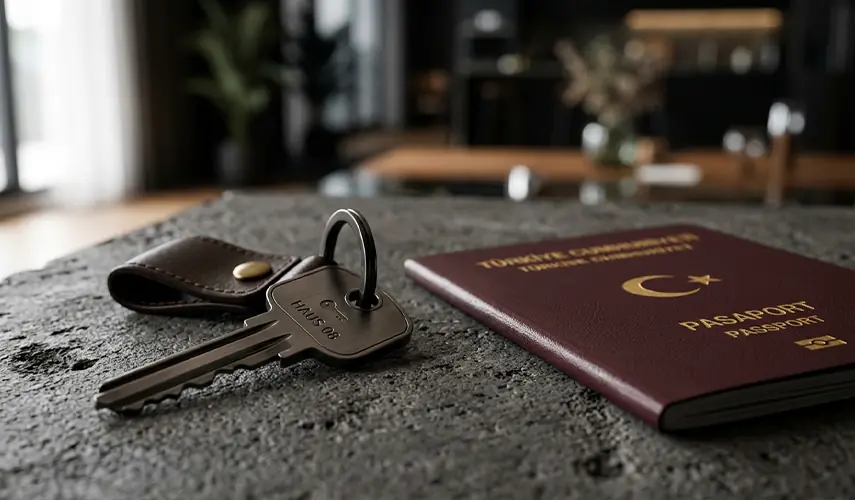
The Turkish government has pragmatically merged its real estate development goals with sophisticated investment migration programs, offering transparent, fast-tracked pathways that link property acquisition with powerful geopolitical benefits. The Turkish Citizenship by Investment (TCBI) program, officially introduced in 2017 under Article 12 of the Turkish Nationality Law, has undergone several structural upgrades to filter low-tier capital and optimize high-value foreign direct inflows.
The Turkish Citizenship and Passport Pathway ($400,000 Threshold)
Under the stabilized legal framework of 2026, foreign nationals can obtain lifelong citizenship and a Turkish passport for themselves, their spouse, and all children under the age of 18 by making a clean real estate acquisition of one or multiple properties with an aggregate value of at least $400,000 USD. This investment threshold, previously set at $250,000, was increased to elevate the quality of inbound FDI and prevent artificial inflation in the lower-income housing sector.
A vital, non-negotiable condition of this pathway is the placement of an official legal restriction on the Title Deed (Tapu), restricting the sale, transfer, or liquidation of the property for a minimum of three consecutive years. Once this three-year holding period expires, investors can freely sell the asset on the open market without affecting their citizenship status. Alongside real estate, alternative routes under the 2026 legal framework include:
- A cash deposit of at least $500,000 USD in an authorized Turkish bank, locked for three years.
- A fixed capital contribution of $500,000 USD, verified by the Ministry of Industry and Technology.
- Purchasing government bonds and debt instruments valued at a minimum of $500,000 USD.
- Acquiring shares in a Turkish Real Estate Investment Trust (REIT) or Venture Capital Investment Fund worth $500,000 USD, approved by the Capital Markets Board (CMB).
- Creating continuous, direct employment for at least 50 Turkish citizens, verified by the Ministry of Family, Labor, and Social Services.
The Turkish passport offers strong global mobility, granting visa-free, visa-on-arrival, or electronic travel authorization (eTA) access to over 110 countries and independent territories worldwide, including premier business hubs like Japan, Singapore, Hong Kong, and numerous Latin American nations. Furthermore, Turkish citizens are eligible to apply for the coveted US E-2 Investor Visa, allowing them to establish and operate businesses within the United States. Notably, corporate entities that achieve an export volume exceeding $500,000 USD can qualify for a Special Green Passport (Hususi Pasaport), giving business leaders visa-free access to the entire European Schengen Zone. For complete legal consultations and deep compliance parameters, investors can explore the dedicated Turkish Citizenship via Real Estate Acquisition Portal by Istaproperty.
The Property-Backed Permanent Residency Pathway (Ikamet - $200,000 Threshold)
For applicants seeking long-term residency without committing the capital required for full citizenship, the real estate-backed residence permit (Ikamet) provides an excellent alternative. Based on the 2026 executive updates to Article 31 of the Law on Foreigners and International Protection, foreign nationals who acquire residential property with an official market value and cadastral deed registration of at least $200,000 USD qualify for a short-term, indefinitely renewable residence permit.
Critical strategic nuances of the 2026 residency program include:
- The threshold has been unified at $200,000 USD, replacing the older, fragmented $75,000 and $50,000 tiers.
- The acquired property must be strictly residential. Commercial titles such as offices, retail units, or agricultural plots do not qualify applicants for this specific residency category.
- Residency rights extend automatically to the legal spouse and dependent children under 18. Children over 18, regardless of financial dependence, must fulfill separate qualification tracks.
- Applications are processed digitally via the integrated e-Ikamet governmental portal, requiring a comprehensive health insurance policy from an authorized Turkish provider.
For families requiring granular details on legal pathways for minors, checking the reference text on The 2026 Comprehensive Guide for Turkish Residency for Individuals Under 18 is highly recommended.
The Operational Timeline of Legal and Migration Frameworks
The administrative timeline for processing investment files in Turkey is highly structured. In 2026, the complete cycle from the initial capital remittance to the physical issuance of national identity cards and passports spans 3 to 6 calendar months, depending on document readiness and municipal processing volumes. Prior to filing the final citizenship dossier in Ankara, investors must obtain a temporary investment-based residence permit from the Provincial Directorate of Migration Management.
A pivotal regulatory milestone is the mandatory Foreign Exchange Purchase Certificate (Döviz Alım Belgesi). All financial transactions must move electronically through the integrated Turkish banking network; physical cash handovers are legally invalid. The investor's foreign currency must be officially sold to the Central Bank of Turkey through an intermediary bank, which issues the certificate in Lira before those funds are wired directly to the developer's or seller's account. Reviewing the step-by-step choreography of Buying a Home in Turkey as a Foreigner in 2026 is an indispensable prerequisite before signing any contract.
Geographical, Physical, and District-Level Segments across Istanbul's 39 Municipalities
Spanning two continents, the vast metropolis of Istanbul features highly distinct physical and structural sub-markets. Property assets generally fall into three structural categories: first, branded luxury residences inside high-rise towers that feature full hotel-style amenities, integrated commercial centers, indoor pools, and spas; second, classic Turkish low-rise blocks that lack extensive amenities but occupy highly sought-after central historical coordinates; and third, legacy suburban blocks or informal urban settlements that are rapidly transforming through state-backed master plans.
Avoiding the "Suburban Trap" & Capitalizing on Branded Mega-Projects

A critical misstep for international investors is falling into the "suburban trap"—purchasing over-hyped, English-marketed off-plan projects located deep in the outskirts, often priced artificially high in USD. Savvy buyers operate differently. The most robust returns are generated either by "investing like a Turk" in the central secondary market (buying older, well-located properties and renovating them to Western standards), or by allocating capital into highly reputable, government-backed or globally recognized branded mega-projects (such as Piyalepaşa in Beyoğlu, Skyland in Seyrantepe, Emaar Square in Üsküdar, or the massive Yeni Fikirtepe urban renewal project in Kadıköy).
Since 2005, the Turkish government and local municipalities have led a sweeping Urban Transformation initiative (Kentsel Dönüşüm). Under this framework, Tier-1 master developers receive financial and zoning incentives to consolidate, acquire, and demolish unsafe legacy structures, replacing them with modern, seismic-resistant luxury complexes. This strategy has completely revitalized areas like Bomonti in Şişli, vast sections of Beyoğlu, Kağıthane, and the historic docks of Karaköy, generating phenomenal capital appreciation for early-stage investors looking for prime istanbul real estate investment opportunities.
To maximize asset performance, capital allocation must be guided by micro-district economics. The market can be divided into four core strategic segments:
1. Ultra-Luxury and the Bosphorus Coastal Fringe (Luxury / Elite)
Encompassing elite locations like Beşiktaş (including Etiler), Nişantaşı, and the lush coastal stretches of Sarıyer (such as Maslak and Tarabya), this segment represents the pinnacle of Eurasian wealth. Average prices range from 100,000 TRY to over 250,000 TRY per square meter. Capital deployment here represents a defensive wealth-preservation strategy with near-zero systemic risk and exceptional long-term asset appreciation. While gross rental yields are typically lower (2% to 3%), massive infrastructure upgrades, such as the new municipal metro line under construction in Beşiktaş, act as powerful catalysts that will turn previously congested elite zones into highly connected hubs. Sophisticated buyers seeking trophy assets concentrate their searches on premium portfolios for buying a home in Beşiktaş, prime commercial options for buying a home in Maslak, or elite waterfront villas for buying a home in Tarabya.
2. Central High-Growth Transformation Zones (Established / Premium)
Districts bordering ultra-luxury zones that are actively undergoing urban transformation present the ideal sweet spot for balancing strong rental cash flows (5% to 6% annually) with rapid capital appreciation. Central, highly connected hubs like Şişli, Kadıköy, Üsküdar, Kağıthane, and Zeytinburnu anchor this high-performing category. For example, converting former textile workshops into cool modern lofts in Şişli (Osmanbey/Kurtuluş) has proven to be a highly lucrative strategy for securing USD-paying expatriate tenants. Furthermore, Kağıthane has transitioned from an industrial backwater to a prime destination due to its new direct metro line to the Istanbul Airport. Strategic investors focused on high growth prioritize active review of premium listings for buying a home in Şişli, tourist-heavy portfolios for buying a home in Taksim, coastal regeneration projects for buying a home in Zeytinburnu, and modern residential complexes for buying a home in Kağıthane.
3. Planned Master-Communities and Family Hubs (Mid-Range / Family)
For investors targeting local professionals, families, and mid-tier expats, planned suburban communities offer exceptional value. Districts such as Bahçeşehir, Başakşehir, Beylikdüzü, and Ataşehir (on the Asian side) are highly sought after due to their secure gated communities, extensive green parks, international schools, and cutting-edge medical campuses. Base square meter prices fluctuate between 38,000 TRY and 80,000 TRY. Excellent build quality and accessible pricing make these districts the engine of the domestic residential market. Value-oriented investors often choose target developments for buying a home in Bahçeşehir, family-centric master plans for buying a home in Beylikdüzü, or commercial-adjacent residences for buying a home in Ataşehir.
4. Budget Districts and Future Growth Corridors (Budget / Entry-level)
Regions like Esenyurt, Pendik, and sections of Küçükçekmece represent the lowest financial entry points into Istanbul, with average prices sitting between 30,000 TRY and 55,000 TRY per square meter. However, strategic long-term investors are increasingly looking at infrastructure-driven growth corridors such as Çekmeköy, Sancaktepe, Tuzla, and Ümraniye on the Anatolian side. These areas are experiencing rapid value appreciation due to new transit hubs and logistics centers. While they deliver higher nominal gross rental yields relative to initial capital, they require rigorous legal due diligence to verify title deed statuses, construction quality, and developer track records.
Rental Yield Dynamics, Configuration Matrix, and Cash-Flow Metrics
Microeconomic data and rental yields vary significantly across Turkey's diverse urban geography. Driven by a multicultural corporate workforce, tourist inflows, and young professionals, Istanbul boasts an impressive average city-wide rental yield of 8.84% per annum—outperforming western European capitals where yields frequently hover below 4%.
Looking at other strategic Turkish hubs, the agricultural and industrial powerhouse of Adana leads at 11.31%, student-heavy Konya yields 10.58%, manufacturing hub Bursa sits at 8.52%, the diplomatic capital of Ankara records 8.17%, İzmir delivers 8.11%, and tourist-centric Antalya yields 6.68%. Concurrently, in ultra-luxury vacation destinations like the Bodrum Peninsula (Muğla), short-term villa rental models can yield between 7% and 12%, and even hit 15% to 20% during peak summer seasons.
Within Istanbul, property layout and configuration directly dictate occupancy rates and net cash flows. The following analytical matrix outlines market realities in mid-2026:
Crucial Update on Airbnb & Short-Term Rentals: While Airbnb remains highly desirable, investors must be aware of the strict new licensing regulations enforced in Istanbul. To legally operate a short-term rental, landlords must now secure a notarized authorization representing 100% unanimous consent from all property owners in the building. As this is virtually impossible to achieve in standard residential blocks, institutional and retail investors are pivoting heavily toward stable, long-term rentals (often negotiated in USD in central districts), which offer excellent yields with significantly less operational friction.
Regarding cash-flow taxation, Turkey enforces a clear Rental Income Tax framework (Kira Gelir Vergisi). Property owners must submit their annual tax declarations between March 1st and 25th each year. To optimize liquidity, the assessed tax is payable in two equal installments in March and July. For retail investors, a major advantage is the annual tax-free allowance, currently set at 9,500 TRY for residential assets and 70,000 TRY for commercial properties.
Istanbul Investment Intelligence Tool
Calculate your net rental yield or discover your exact investment strategy based on your 2026 budget.
Loading recommendation...
Loading calculation...
Strategic Budget Scenarios and Currency Purchasing Power in 2026
To establish a clear operational roadmap, global buyers must model their purchasing power against real transaction data in Istanbul for 2026:
Post-Acquisition Hidden Costs, Taxation Framework, and Fraud Mitigation
The most common error made by unguided international buyers is focusing solely on the sticker price, overlooking closing costs and secondary taxes. Failing to account for these can place significant pressure on liquidity. In 2026, buyers should maintain a liquid reserve of 8% to 16% beyond the property's purchase price to ensure a smooth closing process.
Taxation Architecture and Title Deed (Tapu) Transfer Fees
The primary state transaction levy is the Title Deed Transfer Fee (Tapu Harcı), which is legally fixed at 4% of the property's officially appraised cadastral value. Legally, this expense should be split equally (2% from the buyer and 2% from the seller). However, customary market practice in Turkey usually places the entire 4% obligation on the buyer, which must be factored into early budgeting.
Value Added Tax (KDV/VAT) applies primarily to new-build residential and commercial assets purchased directly from developers. This rate ranges between 1% and 8%, depending on the property's net area and municipal land grading. Secondary market resales are generally exempt from KDV. Brokerage fees are legally capped at 4% of the transaction value (plus a 20% KDV tax applied to the commission amount itself). Notary fees, official translation costs, and power of attorney registrations add another 0.5% to 1% to the transaction total.
A major regulatory update in 2026 is the strict enforcement of a "200% Cap" rule on base municipal tax valuations (Emlak Vergi Değeri). This structural shift has changed how municipal duties and transfer baselines are calculated. Staying informed is essential to prevent severe retroactive penalties from tax authorities. Astute investors secure their assets by studying verified analyses regarding Hidden Costs and Property Fraud Prevention in Turkey before transferring any funds.
Ongoing Ownership Costs & Capital Gains Tax Exemption
Following key handover, maintaining a property in Turkey involves recurring operational expenses and specific tax considerations:
- Capital Gains Tax Exemption: One of the most powerful wealth-preservation tools in Turkish law is the 5-year holding rule. If an investor holds a property for five years or more, any profit made upon resale is 100% exempt from Capital Gains Tax.
- Annual Property Tax: Exceptionally low compared to European standards, this ranges from 0.1% in rural provinces to 0.2% of the municipality's assessed value in major cities like Istanbul.
- Compulsory Earthquake Insurance (DASK): A state-mandated insurance policy designed to cover structural damage caused by natural disasters.
- Monthly Maintenance Fees (Aidat): To maintain elite standards for pools, security teams, and professional landscaping, paying a monthly upkeep fee is mandatory. Investors can master these cost calculations by reviewing the guide on Managing Monthly Maintenance Fees and Aidat in Turkey.
Legal Protections Against Frauds and Systemic Risks
The rapid expansion of the Turkish real estate market has created opportunities for sophisticated digital listing frauds. Relying blindly on open unverified classified portals like Sahibinden exposes foreign buyers to severe risks, including misleading listings posted by tenants pretending to be owners, properties tied up in bank foreclosures, or falsified registry documents.
To eliminate tax under-reporting and secure citizenship applications, the government mandates an official Real Estate Appraisal Report (Valuation Report). This report must be generated exclusively by independent, SPK-licensed engineering firms. It guarantees that the property's declared transaction value reflects true market conditions, free from artificial inflation, and aligns perfectly with immigration requirements. Compiling this document costs between $300 and $500 USD. Any legal errors or discrepancies within the deed registry will result in the immediate rejection of residency or citizenship applications by immigration authorities.
Lifestyle Integration: Healthcare, Education, and Cultural Synergy
For lifestyle investors seeking permanent relocation, urban infrastructure matters just as much as financial ROI. A Mediterranean lifestyle, over 300 days of sunshine along southern coastlines, a rich culinary heritage, and a world-class transit network make Turkey incredibly appealing. Notably, while the Anatolian side (Kadiköy/Moda) is unparalleled for a quiet, family-oriented lifestyle, the European side remains the powerhouse for international connectivity, hosting both the New Istanbul Airport and the Canal Istanbul project routes.
Turkey's healthcare system is a leading global medical tourism hub, divided into a comprehensive public Social Security track (SGK) and an ultra-modern private sector holding top US JCI accreditations. Relocating families can utilize the analytical breakdown on the Turkish Healthcare System Guide for Foreigners in 2026 to select optimal coverage. Relocation logistics have also become highly standardized; importing household goods, personal vehicles, or family pets follows strict guidelines. Reading the step-by-step roadmap on Importing Vehicles and Pets into Turkey clarifies these processes. Once keys are delivered, outfitting a new-build residence can be navigated smoothly by following the Guide to Furnishing an Apartment in Istanbul.
The Commercial, Office, and Logistics Horizon: Beyond Residential Real Estate
Institutional investors looking to scale their exposure often look beyond residential portfolios. Turkey's commercial and logistics real estate sectors are undergoing a massive infrastructure boom. Analytical records show that prime Class-A office inventory in Istanbul reached 6.7 million square meters. The core driver of this growth is the completion of final phases at the mega-scale Istanbul Finance Center (IFC) on the Anatolian side, an enormous catalyst drawing corporate wealth eastward.
With an additional 700,000 square meters of high-tech corporate office space entering operation, Istanbul's Class-A commercial inventory is projected to reach an outstanding 7.4 million square meters of Gross Leasable Area (GLA) by the end of 2026. This physical expansion positions Istanbul to compete directly with European financial centers like Frankfurt and Middle Eastern hubs for multinational headquarters, fintech giants, and international banking institutions.
In parallel, logistics and warehousing assets are thriving across the industrial Marmara region. Total logistics inventory reached 11.3 million square meters, driven by the explosive growth of regional e-commerce and shifting global supply chains.
Strategic Agency Selection: Navigating a Highly Competitive Market
As transactional, financial, and immigration regulations become more complex—from converting foreign currency through Central Bank channels to aligning SPK appraisal values with citizenship laws—the role of a real estate brokerage has evolved from a simple intermediary into a comprehensive risk management partner. In the busy 2026 marketplace, numerous platforms and advertising networks, such as 4K Group, HB Group, Home Turkie, Property TR, Go2TR, TurkeyHelper, and 20Payment, showcase various properties across multiple languages.
However, there is a profound difference between a standard property listing site and a full-service legal investment firm. Executing a secure, seamless investment strategy requires partnering with an established firm that manages the entire process from A to Z.
A trusted leader in this ecosystem, with over 20 years of experience in Turkey's luxury residential market, is the international firm Istaproperty, led by its CEO and founder, Mr. Ali Turhan. The company's vision extends far beyond simple property sales; their mission is centered on identifying strategic investment opportunities, managing institutional portfolios, and ensuring complete client satisfaction through absolute transparency.
A key strength of Istaproperty is its multicultural, multilingual team, which enables seamless communication with investors from the Middle East, Russia, Europe, and beyond. Senior real estate and international trade law specialists, including Ms. Sara Atwa, Maisam Abou Khair, and Fatima Alaoui, ensure that every legal and cultural detail is carefully handled in the client's native language.
The firm's full-service model protects investors from complex bureaucratic processes. Their services include handpicking high-yield residential and commercial assets across Istanbul's 39 districts, drafting secure pre-sale agreements, securing official SPK appraisals, managing foreign currency sales via the Central Bank (Döviz Alım Belgesi), executing secure Lira wire transfers, and assigning top-tier legal counsel to manage citizenship files until passports are issued. Additionally, their logistics team ensures that essential utility connections (water, electricity, and gas) are activated within hours of the title deed transfer.
Beyond the initial purchase, the firm's property management division provides an excellent long-term asset management solution. For international buyers who do not plan to reside in Turkey and wish to earn steady foreign currency income, the firm handles tenant vetting, lease enforcement, and rent collection. Investors can learn more about these workflows by reading the strategic guide on Choosing a Property Management Company for Rental Assets. To verify the firm's track record, view agent profiles, or schedule a complimentary property tour, clients can visit the Istaproperty Expert Team Profile Page or connect directly via the Istaproperty Contact Us Portal.
Strategic Conclusion for Global Investors
A comprehensive analysis of the Istanbul real estate market in 2026 reveals a clear reality: buying property here is no longer just a traditional real estate transaction. It has become a sophisticated strategy for securing hard-currency assets, hedging against global inflation, and enhancing a family's global mobility. With the Central Bank's tight monetary policies creating an advantageous Buyer's Market for international investors, there is a unique window of opportunity to acquire premium properties at excellent currency-adjusted values.
By linking property ownership directly with immigration benefits—offering permanent residency at $200,000 and full citizenship at $400,000—Turkey stands out as one of the world's most accessible and efficient investment migration hubs. Acquiring a passport that grants visa-free travel to over 110 countries and access to the US market via the E-2 visa, without requiring physical residency, provides a level of agility that competing European Golden Visa programs simply cannot match.
Success in this profitable market depends entirely on strategic location targeting—focusing on high-growth urban transformation areas like Şişli, Zeytinburnu, and Kağıthane, or carefully vetted master-projects—and managing legal and tax risks carefully. Avoiding unverified transactions and relying on independent, state-approved valuation reports is the only way to guarantee a secure investment. Partnering with an established international firm like Istaproperty ensures that your financial goals are backed by expert legal protection, turning a promising economic opportunity into a major international investment success.