


 English
 فارسی
فارسی
 العربية
 русский
 USD
USD
 TRY
TRY
 EUR
EUR
 IRR
IRR
 RUB
RUB

Introduction: Navigating the New Era of Turkish Immigration
As we settle into 2026, the landscape for foreigners wishing to move to Turkey has transformed from a liberal "open-door" policy to a sophisticated, regulation-heavy framework. The Turkish Directorate of Migration Management (Göç İdaresi) has fully implemented stricter criteria that prioritize qualified investors and genuine residents over casual tourists.
For expatriates, understanding these shifts is no longer optional—it is a survival requirement. Whether you are planning a strategic move to Istanbul or looking to manage your digital assets while living in Antalya, this comprehensive guide covers everything from the foundational legal changes in real estate to the technicalities of Turkey residency requirements and financial integration.
Part 1: Residency (İkamet) vs. Citizenship (Vatandaşlık) – Defining Your Status
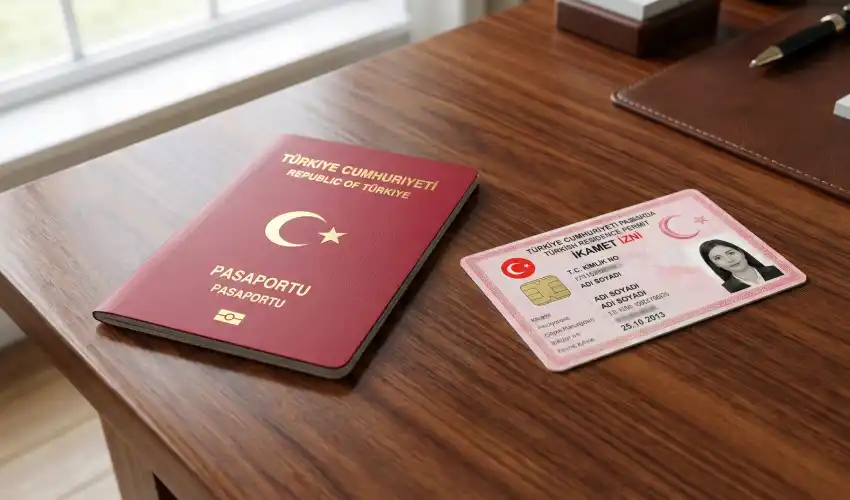
The confusion between having a residency document and being a citizen is the root of many failed immigration strategies. It is crucial to delineate these statuses clearly. Residency in Turkey, officially known as İkamet, is a temporary permit that grants you the right to live in the country for a specific period. It does not, by default, grant you a Turkish passport, voting rights, or unrestricted work privileges.
A frequent question among long-term residents is: Do touristic residence permits count towards Turkish citizenship? The answer, under the sharpened 2026 regulations, is unequivocally no.
Years spent in Turkey under a short-term touristic permit (Section 31-1-e) generally do not contribute to the 5-year residency requirement needed for naturalization, unless combined with a work permit or property ownership rights.
Citizenship is a separate legal track, often requiring a $400,000 investment or 5 years of work-permit-backed residency, whereas standard residency is a permission to reside, not a path to nationality.
Part 2: The "Kimlik" Explained: More Than Just an ID Card
Once your residency application is approved, you receive a physical card. But what is Kimlik in Turkey exactly? The term "Kimlik" simply means "Identity," but for foreigners, it refers to the Foreigner Identification Card containing a crucial piece of data: your Foreigner Identity Number (YKN), which always starts with the digits 99.
This Turkish Kimlik is your key to the country's digital and financial infrastructure. Without a valid 99-number, you remain invisible to the system.
It is the residency document required for everything from signing up for home internet and paying utilities to registering for local digital platforms.
Understanding the power of this card is essential because, in 2026, the integration between your Kimlik number and your registered address (Nüfus) is seamless; if your address registration drops, your Kimlik becomes invalid for official transactions.
Part 3: Financial Integration and Crypto KYC for Foreigners (Paribu & BtcTurk)
One of the most significant challenges for expatriates in 2026 is navigating the local financial ecosystem, particularly in the booming cryptocurrency sector.
Turkey is a global crypto hub, but access to local exchanges like Paribu and BtcTurk is heavily regulated. Many foreigners face hurdles when attempting to register, often searching for clarity on Paribu KYC requirements for foreigners with residence permit Turkey or similar protocols for BtcTurk.
To successfully complete Paribu registration for foreigners with Turkish residence permit, simply holding the card is not enough.
The Know Your Customer (KYC) protocols in 2026 require an "Active Digital Footprint." This means your Turkish Kimlik (starting with 99) must be actively linked to a residential address in the National Address Database (UAVT).
When you attempt Paribu KYC for foreigners with Turkish residence permit, the system automatically queries the NVİ (General Directorate of Population and Citizenship Affairs) database.
If your name spelling in the exchange application does not match your Kimlik exactly (including Turkish characters), or if your birth date format differs, the verification will fail.
Similarly, BtcTurk registration requirements for foreigners with Ikamet follow strict banking regulations.
You cannot deposit Lira into these exchanges using a bank account that is not in your own name. The name on your Turkish Kimlik, your bank account, and your exchange account must be identical.
For BtcTurk registration requirements for foreigners with residence permit Turkey, ensure that your foreign passport number is also updated in your bank's system to match your new Kimlik number, a common bureaucratic oversight that blocks transactions.
Part 4: The Real Estate Route and The $200,000 Rule
For those looking to secure their residency in Turkey through investment, the rules have solidified around the $200,000 threshold.
The era of obtaining residency by purchasing cheap apartments is over.
As of the current regulations, the property must be valued at a minimum of $200,000 USD in both the Title Deed (Tapu) and the official Appraisal Report (Ekspertiz).
This requirement applies to all cities, removing the old distinction between metropolitan and smaller municipalities.
Furthermore, investors must be wary of "Closed Neighborhoods." Over 1,200 neighborhoods across Turkey are closed to new foreign residents due to demographic saturation.
Purchasing a property in these zones—regardless of its price—will result in the denial of your residence permit.
Therefore, satisfying Turkey residency requirements in 2026 starts with a comprehensive due diligence check on the property's location and legal status before any funds are transferred.
Part 5: Relocation Essentials (Flytte til Tyrkiet)
For our European neighbors planning to move—or as the Danes say, "flytte til Tyrkiet"—the preparation phase is critical.
The transition involves more than just packing bags; it requires setting up a legal infrastructure before you arrive.
This includes apostilling vital documents (birth and marriage certificates) in your home country and understanding that European health insurance policies often do not meet the specific criteria for Turkish residency.
Upon arrival, registering your mobile phone (IMEI registration) and obtaining a tax number are immediate priorities.
The Turkey residency requirements for 2026 also mandate a UETS (National Electronic Notification System) address for all applicants, ensuring that the government can digitally deliver legal notices to you.
Conclusion: Strategy Over Speed
Obtaining and maintaining residency in Turkey in 2026 is a test of compliance and attention to detail.
Whether you are analyzing Paribu registration requirements for foreigners residence permit Turkey to manage your portfolio, or searching for the right property to call home, the common thread is accuracy.
The system is integrated, digital, and unforgiving of errors. By ensuring your Turkish Kimlik data is synchronized across banks, the population registry, and service providers, you ensure a smooth, uninterrupted life in this beautiful country.