



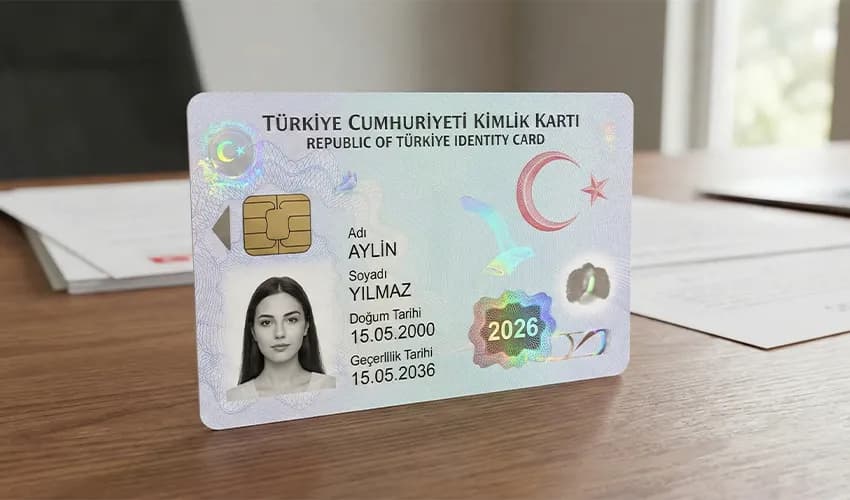
The subject of "Kimlik" (Residence Permit ID Card for foreigners) in Turkey has transformed in 2026 from a routine administrative process into one of the most complex legal and social challenges for migrants. Many people ask, what is kimlik in turkey? In short, the kimlik meaning directly translates to "Identity," but for expats, it represents the official turkish id card for foreigners that allows you to legally live in the country. This research report aims to provide a complete, accurate, and data-driven reference for obtaining your kimlik card.
By examining over a hundred information sources, the new regulations of the Migration Management (Göç İdaresi), Ministry of Interior circulars, and field analyses, we have endeavored to reveal the hidden layers of this process. Unlike the superficial content available online, this guide explores all hidden aspects—from invisible costs to forbidden zones and new digital systems like UETS. For those looking to bypass these hurdles by purchasing a property in Istanbul, having a firm grasp of the turkey kimlik rules is the first step toward a secure life in Turkey.
In recent years, the Republic of Turkey, influenced by economic pressures, housing market inflation, and demographic changes, has moved away from its "open-door" policy that once allowed tourists to receive a one-year residency by simply renting a modest house. The year 2026 is a turning point in this paradigm shift; a time where smart monitoring systems, strict neighborhood controls, and a significant increase in government fees and insurance have placed high barriers before applicants. The goal of this report is to equip the reader with strategic knowledge to navigate these obstacles and secure your turkish kimlik card.
Tourist residency applications face high rejection rates in 2026. Secure a guaranteed Residence Permit or Citizenship by investing in government-approved real estate. → Discover Safe Property Investments Today.
New Turkish Migration Management (Göç İdaresi) Regulations for Foreigners
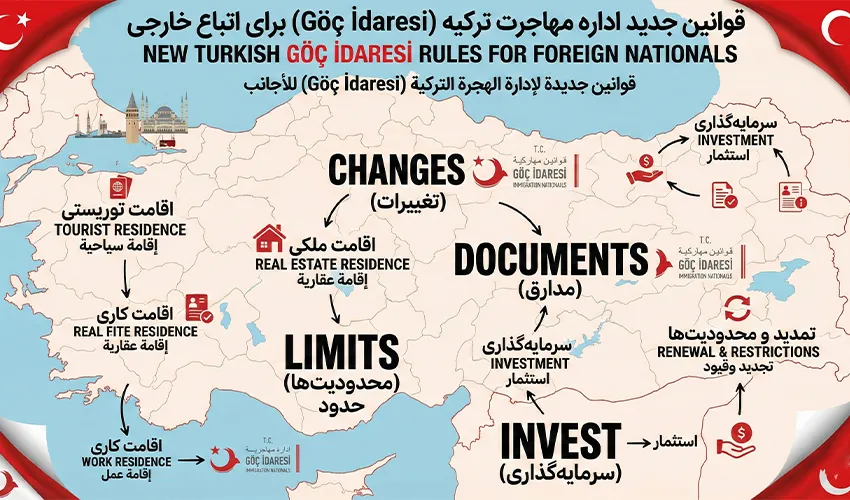
To understand the current situation regarding kimlik turkey policies, one must first recognize the legal and structural roots of the Turkish residency system. Without this knowledge, applicants will find themselves lost in the labyrinth of bureaucracy.
The Law on Foreigners and International Protection (LFIP)
The cornerstone of all Turkish residency regulations is Law No. 6458, titled the "Law on Foreigners and International Protection" (LFIP), approved in 2013 and amended in subsequent years. This law defines visa types, residency conditions, and deportation (Deport) rules. In 2026, the executive interpretation of Articles 31 to 33 of this law, pertaining to "Short-term Residency," has become extremely strict.
While in past years, migration officers easily issued residency based on "touristic intent" (Article 31-1-e), currently, according to unwritten but enforced internal guidelines, the principle is "denial" unless proven otherwise. This shift is particularly evident in metropolitan areas like Istanbul, where population capacity has reached saturation.
Types of Kimlik Cards and Their Applications
As the premier type of identification turkey issues to expats, the turkish id card allows for legal living beyond the visa duration. It is crucial to distinguish this from the turkish citizenship card, which is exclusively for permanent citizens.
A) Short-Term Residence Permit
This is the most common type of residency, divided into several subcategories:
-
Touristic Residence: The highest-risk type of residency in 2026. Statistics show that the rejection rate for first-time applications in major cities has risen significantly. Authorities now demand documented proof of "travel purpose," and merely renting a house is no longer sufficient to get a kimlik card turkey.
-
Property-Based Residence: Previously, buying any property at any price led to residency. However, under new laws, to receive residency based on a Title Deed (Tapu), the property value in metropolitan cities must be at least $75,000 (with newer circulars suggesting $200,000 for a more secure residency guarantee). If the property value is lower, your residency is still considered "touristic," which carries the risk of non-renewal.
-
Commercial and Medical Residence: Issued for those intending to conduct business or seek medical treatment, upon providing company invitations or hospital acceptance letters.
B) Family Residence Permit
This residency is issued for the spouse and children under 18 of a Turkish citizen or a foreigner with a valid permit (such as a work permit). This is one of the most secure methods, provided the "Sponsor" proves sufficient income to cover the entire family's expenses.
C) Student Residence Permit
With touristic residency becoming harder to obtain, many have turned to enrolling in universities or language courses (TÖMER). However, the integrated YÖK (Council of Higher Education) system now monitors student attendance; lack of attendance leads to residency revocation.
List of Forbidden Zones in Istanbul and Other Cities (Closed Neighborhoods)
One of the most strategic pieces of information every applicant must know is the status of "Closed Zones." To prevent demographic shifts and the formation of migrant ghettos, the Turkish government has banned new residency registrations in 1,169 neighborhoods across the country.
The Neighborhood Closure Mechanism
The Turkish Ministry of Interior enforces a law stating that if the foreign population in a neighborhood exceeds 20% or 25% of the total population, that neighborhood is declared "Closed" for new registrations. This means even if you buy or rent a property there, your residency application will be automatically rejected.
Map of Forbidden Zones in Metropolitan Cities (2026)
Many areas popular among foreigners are now blacklisted:
-
Istanbul: The situation in Istanbul is critical. The districts of Fatih and Esenyurt are completely closed. Furthermore, numerous neighborhoods in Beyoğlu, Şişli, Zeytinburnu, Küçükçekmece, Başakşehir, Bağcılar, Avcılar, Bahçelievler, Sultangazi, and Esenler have been closed.
-
Example: In Beyoğlu, neighborhoods like "Kocatepe," "Şehit Muhtar," and "Bülbül," which have historical significance, are no longer available for new residency.
-
-
Antalya: As the second-largest migration hub, strict restrictions apply in Muratpaşa, Konyaaltı, and Alanya. In some popular coastal neighborhoods of Alanya (such as Mahmutlar during certain periods), new registrations have been suspended.
-
Ankara and Izmir: In the capital, areas of Çankaya, and in Izmir, parts of Konak and Bornova are under restrictions.
Coping Strategy for Applicants
The biggest mistake applicants make is trusting real estate agents or landlords who say "it's no problem." The landlord is only looking to rent their property and has no responsibility regarding your turkey id card.
-
Necessary Action: Before signing any contract or paying a deposit, you must check the exact neighborhood (Mahalle) name against the official Migration Management list or reputable legal sites.
-
Proviso: These restrictions usually do not apply to Renewals for those who were already residing in that neighborhood, unless the individual changes their address.
Worried About "Closed" Neighborhoods?
Don't risk your money on a property where you can't get a Kimlik. We offer premium apartments in fully approved, residency-eligible districts.
View Residency-Eligible PropertiesTurkey Kimlik Costs 2026; Insurance, Land Fees, and Permit Card Prices
Unchecked inflation in Turkey has caused government fees and ancillary residency costs to increase exponentially. Understanding the residence permit turkey cost is vital for budget management. Expenses are divided into "Government & Mandatory" and "Ancillary & Executive."
Government Fees (Paid to the Tax Office)
These amounts are paid directly to the state treasury and are non-negotiable. The following amounts are updated based on the official 2026 tariffs:
Expense Type |
Approximate Amount (2026) |
Additional Details |
|---|---|---|
Card Issuance Fee (Değerli Kağıt) |
964 Lira |
Physical cost of the smart card, increased from previous years. |
Land Fee / Visa (Single Entry Fee) |
9,376.40 Lira |
For those who entered without a visa or stayed beyond the limit. |
Residence Permit Fee |
$80 (First Year) |
Primary residency cost; renewals are usually calculated at $60. |
Analysis of the Principle of Reciprocity for Certain Nations
According to Turkish law, the "Residence Permit Fee" (not the card fee) is determined based on how the applicant's country treats Turkish citizens. Countries like Czechia, Denmark, Ireland, Nepal, and Syria have been exempt from this fee since 2011. For some nations, the situation is complex; sometimes total exemption is granted, and other times fees are collected under different titles. However, the base card fee (964 Lira in 2026) remains constant.
2026 Insurance Shock: Increased Liability Caps
One of the most significant changes affecting the overall turkey kimlik card cost is the revision of private health insurance laws for foreigners. Minimum mandatory coverages have increased significantly:
-
Outpatient Coverage: Minimum 15,000 Lira.
-
Inpatient Coverage: Minimum 150,000 Lira at non-contracted hospitals and unlimited at contracted hospitals.
Financial Impact: Base policy premiums have surged. For 2026, the annual insurance cost for individuals aged 36 to 45 is estimated between 1,700 and 3,000 Lira.
Hidden and Executive Costs
Additionally, applicants must budget for the following:
-
Notary: Certification of rental contracts, with costs increasing based on page count.
-
Official Translation: Passport translation and certification.
-
Real Estate Commission: Usually 12% of annual rent + VAT (KDV).
-
Deposit (Depozito): Usually equivalent to one or two months' rent.
How to Obtain UETS and the Difference Between Numarataj and Nüfus for Residency
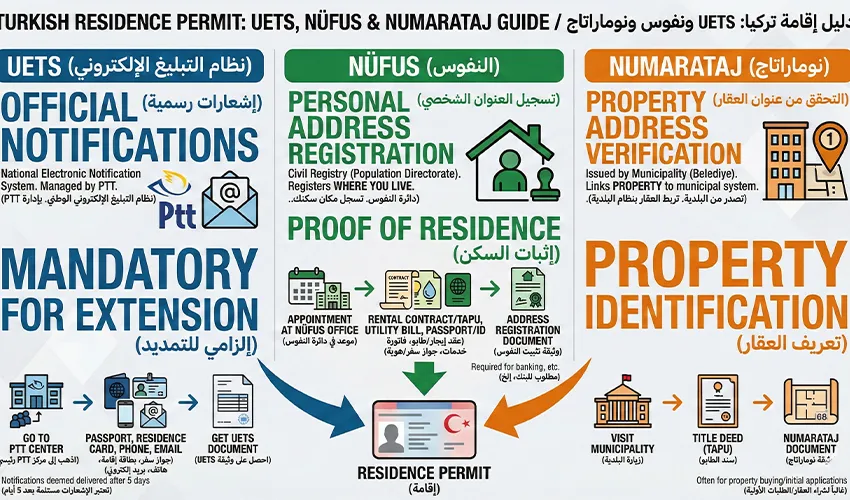
In the spirit of e-government, Turkey has established new digital requirements for residency, failure to comply with which results in an incomplete application file.
National Electronic Notification System (UETS)
Having a UETS address is mandatory for all residency renewal applicants and most initial applications in 2026.
What is UETS and why is it vital?
UETS (Ulusal Elektronik Tebligat Sistemi) is a legal electronic mailbox managed by the Turkish Post (PTT). All official notifications from the Migration Management, courts, and government entities (such as document deficiency notices, deportation orders, or fines) are sent to this mailbox.
-
Legal Note: According to Law Note 7201, once a message reaches your UETS, it is considered "notified" after 5 days, even if you do not open it. Ignorance of the notification grants no rights in court.
How to Obtain UETS
For foreign nationals, obtaining UETS online is difficult as it requires an electronic signature (e-imza). The standard method is in-person at PTT central branches with the following documents:
-
Passport and copy.
-
Residency card (if existing) and Kimlik number (99...).
-
An active mobile number registered in the applicant's name.
-
Completed UETS application form.
The Address Tangle: Numarataj vs. Nüfus
One of the biggest confusions for applicants is the difference between "Numarataj" and "Nüfus registration."
-
Numarataj: A document issued by the Municipality confirming the technical specifications of the property (exact address, usage type, unit number in the national MAKS system). This proves the place you rented actually exists and is residential. Usage: Mandatory for initial residency applications.
-
Nüfus Registration (Adres Kayıt): A document issued by the Civil Registry (Nüfus Müdürlüğü) showing "who" lives at that address. Usage: After receiving your card, you legally have 20 days to register your address. Failure to do so results in fines and risk of residency revocation.
Chronological Order: 1. Rent a house -> 2. Obtain Numarataj (from Municipality) -> 3. Receive Residency -> 4. Register Nüfus (at Civil Registry).
Visual Guide to e-Ikamet Registration and Required Documents for Randevu
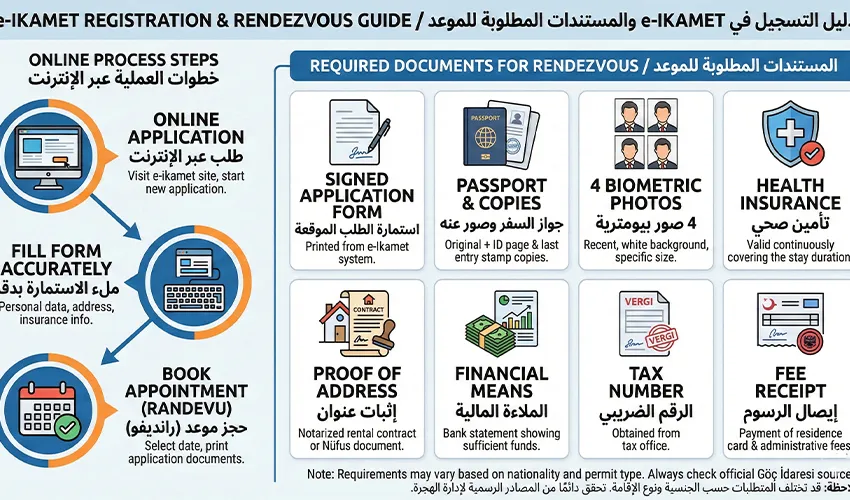
The e-Ikamet system is the gateway to Turkish residency. In 2026, this system has become smarter and is connected to other databases (such as land registry and police). To master the turkish kimlik application process, follow these steps.
Operational Application Steps
-
Document Preparation: Before starting, prepare your biometric photo (ICAO standard), insurance file, and passport information.
-
Online Form Completion: Enter the official site
e-ikamet.goc.gov.trto perform a turkey kimlik check online or apply. Warning: Use only this site. Similar sites with.comor.netextensions belong to intermediary firms and scammers who charge exorbitant fees for a simple form. -
Select Application Type: "First Application" for the first time and "Extension" for renewal. Errors here are irreversible.
-
Appointment Scheduling (Randevu): The system automatically or selectively determines the date and time for your visit to the Migration Management (Göç İdaresi). In busy cities like Istanbul, the waiting time may range from a few weeks to several months.
Required Documents (Checklist)
-
Signed application form (color printout).
-
Original passport and copy (Bio-data page + entry stamp page).
-
4 biometric photos (recent, white background).
-
Valid insurance policy (Original stamped/signed version or electronic version with QR code).
-
Notarized Rental Contract along with a copy of the Title Deed (Tapu) and Numarataj.
-
Receipts for tax payment and card fee.
-
Proof of Funds: Extremely vital in 2026. Turkish bank statement (if available) or retirement pay slip from the country of origin (translated and apostilled). For tourists, merely showing cash is sometimes insufficient; bank documents are required.
Reasons for Turkish Residency Rejection (Article 32) and Legal Appeal Methods
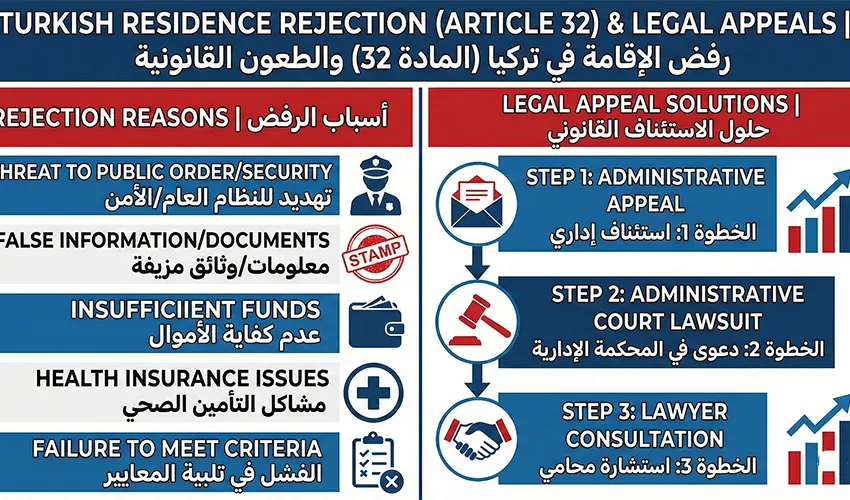
Perhaps the most daunting part is receiving a rejection SMS or letter. Understanding the reasons and ways to counter them is the boundary between staying and deportation.
Why Are Applications Rejected? (Anatomy of Article 32)
The most common reason for touristic residency rejection is citing Article 32 of the LFIP Law. This article states that the applicant must have a "justified reason" for residency.
-
2026 Policy Shift: In the past, "tourism" was a justified reason. Now, the case officer has full discretion to say "your travel plan is not convincing" or "you intend to work illegally." Failure to provide a detailed Travel Plan, hotel or domestic flight bookings, and lack of strong financial means all lead to rejection under Article 32.
-
Other Reasons: Residing in a forbidden zone, invalid insurance (Fake Insurance), and security records (Codes G and Ç) are other factors.
Post-Rejection Actions
If your application is rejected:
-
Exit Deadline: You usually have 10 days to leave Turkish territory. If any days remain from your 90-day visa, you can stay until it ends (but you do not have residency).
-
Administrative Appeal: You can file a lawsuit in the Administrative Court within 60 days. This is the only legal way to annul the Migration Management's decision.
-
Court Advantage: Many rejections (particularly those based on subjective interpretations of Article 32) can be overturned in court, as the judge rules based on documents rather than the officer's speculation.
-
Need Help Navigating the Kimlik Process?
A single mistake on your application can lead to deportation. Let our dedicated team of legal professionals ensure your paperwork is 100% compliant.
Speak with a Turkish Immigration ExpertBest Methods for Obtaining Residency (Property, Educational, and Family)
Investment Scenario (Property)
If you have sufficient budget ($75,000 minimum appraisal value in major cities, moving toward $200,000), property residency (Type E) is the most secure option. This residency is renewable and can lead to citizenship after 5 years (subject to physical presence requirements).
-
Vital Point: The "Expertise" (Ekspertiz) value of the property is the criterion, not the price paid to the seller. Many properties have actual values lower than the sales price, which may turn your residency into "touristic."
Educational Scenario
Enrolling in a university or university-affiliated Turkish courses (TÖMER) is a legal path to residency.
-
Warning: Nominal enrollment in private universities just to get a card is now monitored. If you do not attend classes, the university is obliged to report to Migration Management, and your residency will be revoked.
Family Scenario
If one member obtains a Work Permit (Çalışma İzni), the other members can obtain family residency. A work permit not only solves the residency problem but also builds insurance and pension history and paves the way to citizenship after 5 years.
Kimlik Renewal Laws, Lost Card Fees, and Exit Restrictions
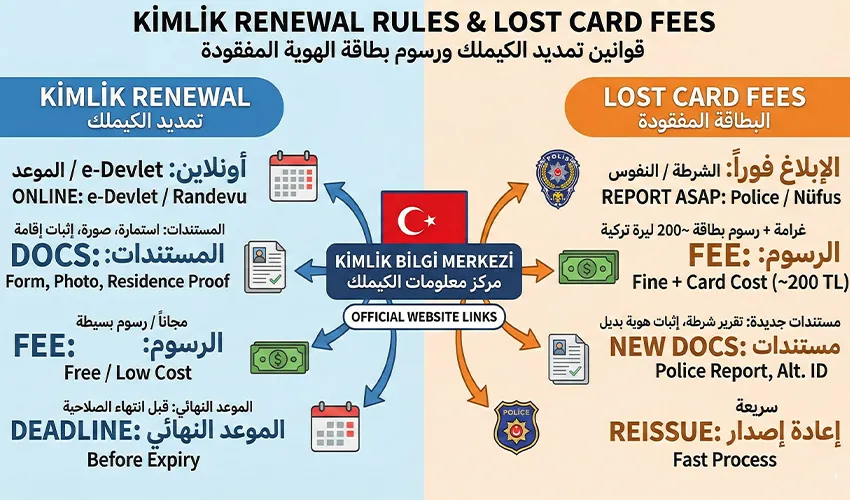
Receiving the card is not the end of the journey; it is the beginning of a legal responsibility.
Extension
Residency renewal in 2026 is as difficult as the initial application. You must apply 60 days before the card expires. Late applications incur fines. For touristic renewal, you must prove you are still a "tourist" (which is difficult for someone who has been in Turkey for a year). The UETS postal system is mandatory for renewals.
Lost Card
If your kimlik card is lost or stolen:
-
Immediately go to the police and get a lost report (Kayıp Tutanağı).
-
Visit Migration Management (in some cases without an appointment).
-
Pay the card re-issuance fee (half the permit fee + full card fee).
-
A new card is issued and sent.
Exit Restriction (120 Days?)
The old law stating residency revocation if exiting for more than 120 days has been canceled for short-term permits. However, for "Long-Term Residence" (issued after 8 years), an exit restriction of more than one year exists.
Conclusion: The Future of Migration to Turkey; Should We Act in 2026?
2026 is the year of migrant screening in Turkey. The government's policy is clear: Turkey seeks genuine investors, professionals, and students, and has narrowed the space for recreational stays with no economic value. Receiving a Kimlik is no longer a "right" but a "privilege" that must be earned by proving merit through financial, documentary, and legal proof.
To succeed on this winding path:
-
Avoid Forbidden Zones.
-
Obtain Valid Insurance with the new 2026 coverages.
-
Define your Residency Purpose beyond "tourism" (language learning, investment, market research).
-
Use Legal Consultants and Turkish lawyers; do not trust street brokers.
-
Take the digital UETS and address registration systems seriously.
The turkish id card remains a key to global markets and living in one of the region's most beautiful countries, but this key is now protected in a safe with digital and legal locks.