


 English
 فارسی
فارسی
 العربية
 русский
 USD
USD
 TRY
TRY
 EUR
EUR
 IRR
IRR
 RUB
RUB
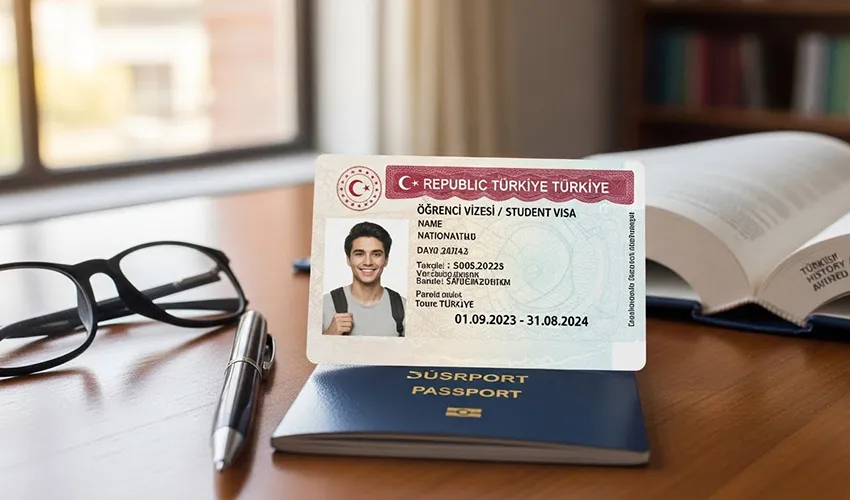
The Turkey, transitioning into 2025, has fundamentally redefined its migration management strategies, shifting from a "quantitative attraction" approach towards "qualitative selection." This country, known over the past decade as an emerging and attractive destination for international students—especially from the Middle East, Central Asia, and Africa—is now applying stricter regulatory filters. It seeks to align its higher education system with the country's broader security and economic standards. Data analysis indicates that policymakers in Ankara, by amending the "Law on Foreigners and International Protection" (YUKK) and updating executive regulations in 2025, have drawn a clear distinction between "genuine intent to study" and "residency as a cover" (migrating under the guise of study).
In this specialized report, utilizing multiple diplomatic, legal, and academic sources, we delve into a deep analysis of Turkey's student visa ecosystem. This document goes beyond a simple guide, analyzing the reasons behind the changes, interpreting the legal clauses related to rejections, and providing data-driven strategies for overcoming bureaucratic hurdles. The report focuses particularly on emerging challenges in 2025, including a significant increase in financial solvency requirements, geographical restrictions on housing, and the complexities of family reunification for students across various academic levels.
Why Can't One Become a Student with a Tourist Visa Anymore?
One of the most significant developments in 2025 is the blocking of shortcuts for residency. In previous years, many students would enter Turkey with a tourist visa or visa exemption and then apply to change their status. Evidence suggests that the Directorate General of Migration Management (Göç İdaresi), citing Article 32 of Law 6458, now rejects a high number of short-term residency applications (tourist) whose genuine purpose is study but who lack the initial student visa. This shift in approach has made obtaining a "Student Visa" (Öğrenci Vizesi) from Turkish consulates in the country of origin an unavoidable requirement, not an option.
Steps to Obtain a Turkish Student Visa; From Consulate Application to Legal Entry
The legal framework for student entry and residence in Turkey is based on a precise distinction between the "right of entry" and the "right of residence." Understanding this legal duality is the first step toward avoiding immigration violations that could lead to deportation or heavy fines.
Documents and Conditions for Obtaining a Student Visa from the Consulate
The student visa is a document issued by the Turkish Ministry of Foreign Affairs (MFA) through its foreign representations, granting only permission to enter the customs territory of Turkey for the purpose of university registration.
-
Time Validity: This visa is usually issued as a "Single Entry" with a validity of 30 to 90 days. This time frame is the deadline by which the student must complete the university registration process and the residency application.
-
Specific Consular Requirements 2025: In 2025, Turkish consulates, in addition to the acceptance letter, are placing a special focus on "intent to return" and "financial ability." For example, Iranian applicants are required to provide physical documents on the day of the interview, and the E-Visa system is not valid for study purposes, even if the applicant's passport includes a tourist exemption.
-
Application Process: The applicant must first fill out the forms in the Consular Pre-registration System (Konsolosluk.gov.tr) and then schedule an in-person interview appointment. In consulates like Dubai or Tehran, the daily quota is limited (e.g., 40 people in Dubai), which highlights the necessity of applying early.
Important Warning: The Difference Between Electronic Visa (E-Visa) and Student Visa
Many applicants mistakenly believe that they can enter using an Electronic Visa (E-Visa) or airport visa and then register at a university. The 2025 regulations explicitly state that the E-Visa is only valid for "tourist" and "commercial" purposes. Entering with this visa and attempting to obtain a student residence permit carries a high legal risk, and the migration officer may deem the applicant's intent dishonest and reject the residency application.
Visa Exemptions and Their Limitations
Holders of certain passports (such as service or diplomatic passports) may be exempt from the visa requirement, but for a study stay exceeding 90 days, they still need to go through the legal process. Also, citizens of some countries holding a Schengen or US visa may be able to obtain a conditional E-Visa, but this path is not recommended for long-term study residency, and the standard route (Sticker Visa) offers higher legal security.
Turkish Student Visa Financial Solvency Requirements 2025; Exact Amount and Bank Documents

Currency crises and inflation in Turkey have led the government to impose unprecedented strictness regarding the proof of Financial Sustainability in 2025. The goal of these strictures is to ensure the student does not become a burden on Turkey's welfare system and to prevent illegal employment.
What is the Minimum Account Balance for Student Residency?
While showing a lump sum (e.g., $3,000) was previously considered sufficient, in 2025, the evaluation criterion is tied to the "minimum wage" (Asgari Ücret).
-
Base Standard: According to new regulations, the applicant must demonstrate that they have income or savings equivalent to at least **1.5 times the monthly minimum wage** of Turkey for the entire one-year residency period.
-
Actual Figures: Estimates suggest that for 2025, providing financial solvency between **$6,000 to $10,000 USD** (or the equivalent in Lira/Euro) is essential to cover one year's living expenses. This amount is separate from university tuition fees.
-
Geographical Differences: The cost of living in metropolitan areas like Istanbul and Ankara is significantly higher than in Anatolian cities like Konya or Erzurum. Migration officers in Istanbul may have higher financial expectations and review documents with more scrutiny.
How to Provide Bank Statements and Banking Sensitivities
The Migration Directorate and consulates have become highly sensitive to "hot money" (sudden deposits before printing the bank statement) in 2025.
-
Account Turnover: The applicant must provide 3 to 6 months of bank statements showing a reasonable and stable financial flow. The account balance must be stable throughout the period.
-
Transparency of Income Source: If the student does not have personal income, they must provide a "Sponsorship Letter."
-
Blocked Account: Some reports indicate that consulates may require applicants to block an amount in a Turkish bank account or use blocked accounts (similar to the German model) to ensure the money is spent strictly on education.
Sponsorship Conditions for Students
For students who lack personal financial means, the sponsor (usually parents) plays a key role.
-
Sponsor Requirements: The sponsor must provide a notarized commitment letter (Taahhütname) in which they assume responsibility for all the student's expenses. This commitment must be supported by the sponsor's employment documents, salary slips, or business license. The sponsor's income must be such that, after deducting their own living expenses, they have the ability to cover the student's expenses (at least one-third of the minimum wage for each dependent).
Table of Student Living Expenses in Turkey (2025)
The table below, based on extracted data, provides an estimate of essential expenses for an international student in Turkey.
| Row | Expense Category | Estimated Cost (USD) | Description |
|---|---|---|---|
| 1 | Public University Tuition | 500 - 2,000 | Varies by major and university |
| 2 | Private University Tuition | 3,000 - 25,000 | Medical majors are more expensive |
| 3 | Living Expenses (Accommodation & Food) | 5,000 - 8,000 | Depends on city and lifestyle |
| 4 | Health Insurance (Annual) | 50 - 150 | Basic private insurance or GSS |
| 5 | Residency Card Issuance Fee | ~20 - 30 | Plus variable taxes |
| 6 | Books and Study Supplies | 200 - 500 | Variable |
| Total | Minimum Proposed Budget | ~6,000 - 10,000 | Excluding university tuition fees |
Obtaining Turkish Student Residency (Kimlik); Migration Directorate and Insurance Steps
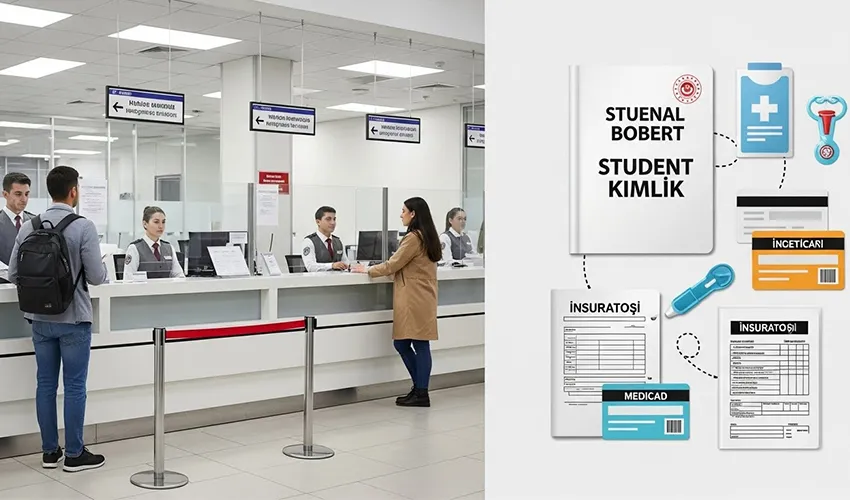
Entry into Turkey is only half the journey. The more challenging half is converting the visa into a "Student Residence Permit." This process is supervised by the Directorate General of Migration Management (Göç İdaresi), and failure to comply with timelines can lead to illegal status.
Legal Deadlines and the e-İkamet System Tutorial
Law 6458 stipulates that foreigners must apply for residency before their visa expires. For students, this step must be taken immediately after final registration at the university.
-
Online Registration: The applicant must visit the e-ikamet.goc.gov.tr system and complete the "First Application" (İlk Başvuru) form. The information must be entered exactly as it appears on the passport. Any discrepancy in name or date of birth can delay the process by months.
-
Scheduling the Interview (Rendezvous): After completing the form, the system automatically, or by user selection, sets a date and time for an in-person visit to the Provincial Directorate of Migration Management. The appointment slip must be printed and serves as a temporary residence permit until the interview day.
New House Rental Rules and Forbidden Neighborhoods for Foreigners
One of the major challenges in 2025 is the restrictions related to the residential address.
-
Forbidden Neighborhoods: The Turkish Ministry of Interior has declared a list of neighborhoods where the concentration of foreigners exceeds 25% as "closed." Registering a new address in these neighborhoods for obtaining initial residency is forbidden. Students must check the status of the neighborhood through official channels before renting a house.
-
Address Confirmation: If the student lives in a rented house, the lease contract must be notarized at the Public Notary (Noter), and the landlord must also give consent. For dormitory residents, an official letter from the dormitory management with an authorized signature is mandatory.
Student Insurance: Private Insurance versus State Insurance (GSS)
According to Article 38 of the Law on Foreigners, having valid health insurance is mandatory for the issuance of a residence permit.
-
Private Insurance (Özel Sigorta): Most students purchase low-cost private insurance to start the process. These insurances typically have limited coverage and are primarily used to fulfill the administrative requirement.
-
General Health Insurance (GSS): The Turkish government allows foreign students to join the SGK system within 3 months from the date of university registration by paying a monthly premium. This option is highly recommended in 2025 because it provides full medical coverage in state hospitals and offers greater peace of mind.
Turkish Student Work Permit 2025; Conditions for Working While Studying
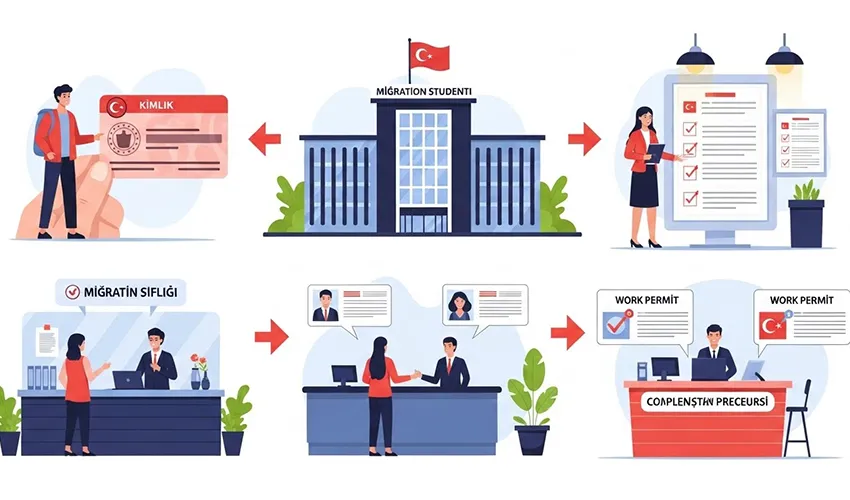
One of the common questions is the possibility of legal work while studying. Turkish law makes a precise distinction between academic levels in this regard, as defined in the International Labor Law (No. 6735).
Work Permit Restrictions for Undergraduate Students (Bachelor's)
Undergraduate students are **not entitled to receive a work permit in the first year of study**. This law is established to ensure the student focuses on their coursework and masters the language. After completing the first year, students can apply for a part-time work permit (maximum 24 to 30 hours per week). This permit must be applied for by the employer, and the student cannot apply independently.
Work Privileges for Master's and PhD Students
Master's and PhD students are eligible to apply for a work permit from the moment of entry and registration. They can be employed as researchers or staff in university projects or the open labor market, provided that the employer goes through the legal process of obtaining a "Çalışma İzni."
Internship Regulations
Internships that are a mandatory part of the curriculum (such as medical internships or engineering apprenticeships) do not require a separate work permit and are covered by university accident insurance. However, voluntary internships are subject to strict labor laws, and performing them without a permit is considered a violation.
Turkish Student Dependent Visa; Conditions for Bringing Spouse and Children
Family Reunification policies in Turkey are highly discriminatory based on the student's academic level. This is a determining factor for married applicants.
Dependent Visa for Undergraduate Students
Current regulations do not easily allow undergraduate students to apply for dependent residency for their spouse and children. The spouse and children of these students usually have to apply through other methods such as tourist residency (which has become very difficult now) or property purchase. This restriction causes many families to face issues of separation or unstable residency.
Family Residency for Graduate Students (Master's and PhD)
Master's and PhD students have the right to apply for a "Family Residency" (Aile İkamet İzni) for their spouse and children under 18.
-
Income Condition: The student (sponsor) must prove that they have sufficient income to support their family members. The calculation formula in 2025 is strict: the sponsor's income must not be less than the sum of one-third of the minimum wage for each dependent individual and must not be lower than the national minimum wage overall. Given that students usually do not have official income, proving this clause through bank deposits or financial support from outside the country is challenging.
-
Documents: Providing the marriage certificate and children's birth certificates, which must be Apostilled and officially translated, is mandatory.
Turkish Language Course Visa (TÖMER); Residency Conditions and Limitations
Studying in Turkish language courses (TÖMER) is a common path to enter Turkey, but its residency rules are different from university studies.
Characteristics of the Language Study Visa
The visa issued for TÖMER is not a full student visa and is usually limited to the duration of the language course. The language institute must have official authorization from the Ministry of National Education (MEB) for its acceptance letter to be considered valid.
Residency Limitations with TÖMER Certificate
-
Non-Renewability: Residency based on the language course is usually issued for only one year and is not repeatedly renewable. The student is expected to enter a university after the language course ends.
-
No Right to Work: TÖMER students generally do not have the right to obtain a work permit.
-
Rejection Risk: If there is a large age gap between the applicant and their last academic degree (Gapping), migration officers may deem the language course registration as a cover for residency and reject the application.
Reasons for Turkish Student Visa Rejection and Methods for Overcoming Rejection

In 2025, the rejection rate for visa and residency applications has increased. Analysis of rejected files shows that the main reasons revolve around "Article 7" and "Article 32" of the Law on Foreigners.
Rejection Based on Article 32: The Importance of Residency Purpose
This article addresses the "justification of the residency purpose." If the migration officer is not convinced that the applicant's primary goal is study, the application will be rejected.
-
Red Flags: Registration in low-cost courses or unaccredited universities, lack of class attendance, or submission of weak financial documents, all lead to rejection under this article.
Rejection Based on Article 7: Security Issues and Forged Documents
This article has a wide scope and includes submitting forged documents, having a criminal record, or even security complaints. For example, presenting fake insurance or a sham lease contract can lead to a long-term entry ban (Inadmissibility).
Common Mistakes Leading to Rejection
-
Document Deficiency: Failure to provide a certified translation or Apostille of academic documents.
-
Passport Issues: Passport validity must be at least 60 days longer than the requested residency period. If the passport is valid for less than one year, a shorter residency will be issued.
-
Information Mismatch: Discrepancy in the spelling of the name on the passport and academic documents.
Guide to Turkish Student Residency Renewal and University Change
Residency renewal in subsequent years requires careful planning. The student must apply for renewal 60 days before the current card expires.
Residency Extension Steps
The renewal process is similar to the initial application, with the difference that it requires the submission of transcripts and an active student status certificate. Students who are not in "Active" status (e.g., academic leave or not selecting courses) may face difficulties in renewal.
Rules for Changing University or Major
In case of changing the university or major within the same province, the student must notify the Migration Directorate within 20 days to update the card information. If the university change leads to a change in the province of study, the student must open a new file in the new province and obtain new residency. Failure to notify can lead to the cancellation of the residency permit.
Converting Student Residency to Work or Tourist Residency After Graduation
After graduation, the student has only 10 days to leave the country or change their residency type.
-
Job Search Residency: Unlike some European countries, Turkey does not have a dedicated long-term job search visa, but graduates can apply for a short-term residency (with the aim of converting it to a work permit), which has become highly restricted in 2025.
-
Work Residency: The best path is to find an employer before graduation and directly convert the student residency into a work permit.
Conclusion
Studying in Turkey in the 2025 horizon is an opportunity intertwined with bureaucratic and financial challenges. Success in this path requires moving beyond the traditional approach and adopting a professional strategy: focusing on genuine financial solvency, choosing clear legal pathways, and avoiding risky shortcuts. By strictly adhering to the legal requirements detailed in this report, students can benefit from the advantages of studying at the crossroads of East and West.